The Master Timeline
Event Timeline body { font-family: Arial, sans-serif; background-color: #f4f4f9; margin: 0; padding: 0; } .timeline-container { max-width: 900px; margin: 50px auto; p...
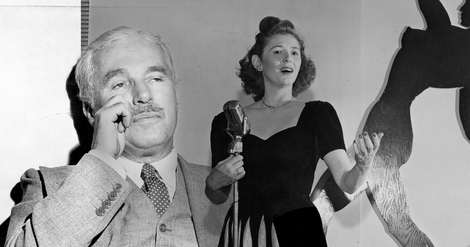
Joan Barry was an American actress who became involved with Charlie Chaplin during the early 1940s. Their relationship later resulted in a highly publicized paternity dispute and a crimin...
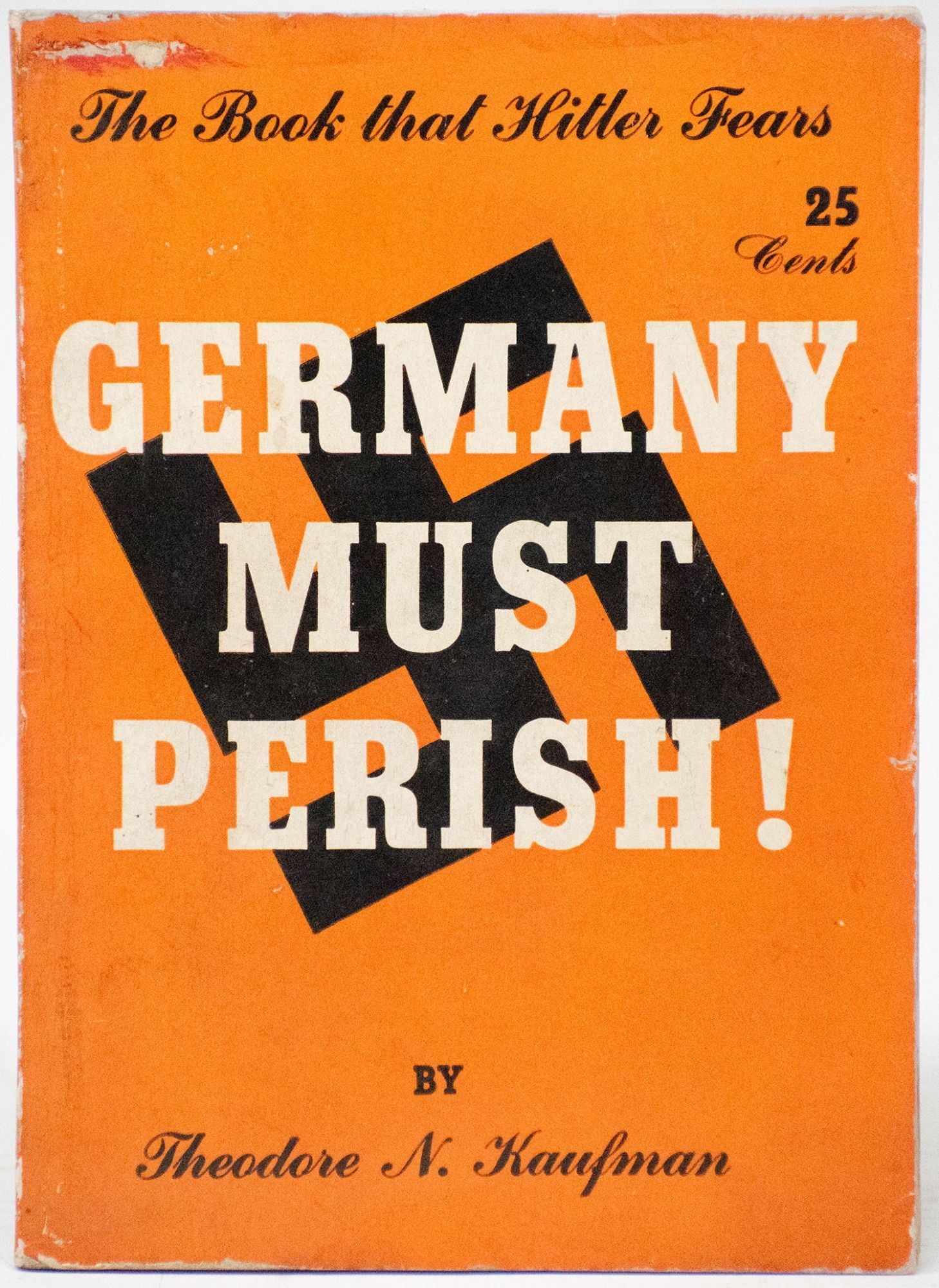
Publication of *Germany Must Perish!* by Theodore Kaufman On February 28, 1941, American author Theodore N. Kaufman self‑published a book titled *Germany Must Perish!* through ...
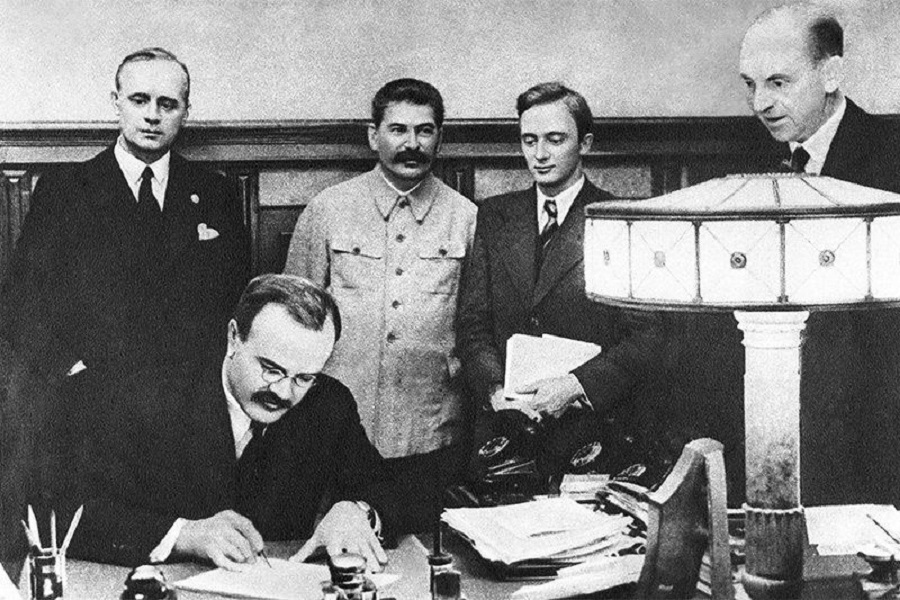
The German–Soviet Non-Aggression Pact And Its Secret Protocols On August 23, 1939, the governments of Germany and the Soviet Union signed a non-aggression treaty in Moscow. The...
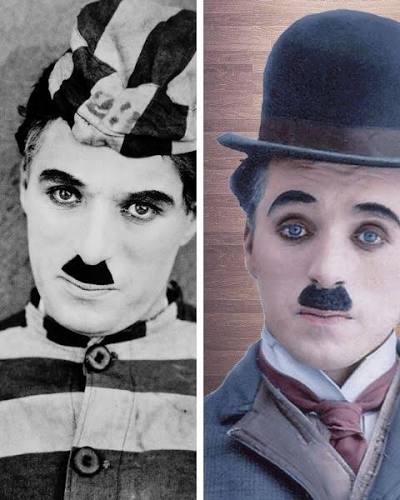
Charlie Chaplin was an English actor, filmmaker, composer, and producer who became one of the most prominent figures of twentieth-century cinema. His career included silent films, sound f...
8 November 1941 — Several Albanian communist groups unite to establish the Communist Party of Albania. Enver Hoxha soon becomes its dominant political figure.
22 December 1941 — Roosevelt and Churchill begin the Arcadia Conference in Washington shortly after American entry into the war. Despite Pearl Harbor, the United States and Britain confir...
14 August 1941 — Roosevelt and Churchill issue a statement of broad principles for the postwar world, including territorial restraint, economic cooperation and forms of self-government. T...
1941–1944 — Germany, Italy and Bulgaria occupy Greece after the Axis invasion.
29 September 1941 — German SS, police and associated units murder tens of thousands of Jews in the Babi Yar ravine near Kyiv over two days. The massacre becomes one of the most notorious ...
23 August 1941 — German forces intensify operations that culminate in one of the largest encirclements in military history around Kyiv. Hitler diverts armored forces southward rather than...
10 July 1941 — German forces begin a major battle around Smolensk on the road to Moscow. German armored groups again encircle large Soviet forces, but Soviet resistance becomes stronger a...
6 June 1941 — The German High Command issues the Commissar Order before the invasion. Political commissars captured with Soviet forces are to be separated and killed rather than treated a...
22 June 1941 — SS and police killing units move behind German armies. Their operations rapidly expand from targeting Soviet officials toward systematic mass murder of Jewish communities. ...
22 June 1941 — As Chief of the Army General Staff, Halder helps direct Germany's opening eastern campaign. His diary records both military planning and the rapid realization that Soviet m...
7 July 1937 — Fighting near the Marco Polo Bridge escalates into a major war between Japan and China. Japanese forces capture major cities including Shanghai and Nanjing, but China does n...
23 May 1941 — German economic planners develop guidelines that assume food from occupied Soviet territories will be redirected toward Germany and the Wehrmacht. Officials understand that ...
1 October 1941 — German supply systems struggle to sustain armies advancing hundreds of kilometers into Soviet territory. Roads deteriorate in autumn mud, rail gauges differ from German s...
11 December 1941 — Hitler declares war on the United States despite Germany not being automatically required by the Tripartite Pact to do so after Japan's attack. The United States declar...
22 June 1941 — Guderian commands Panzer Group 2 during Operation Barbarossa. His armored forces achieve dramatic advances and participate in major encirclements. He later clashes with Hit...
1940–1944 senior Japanese leadership — General Hideki Tojo becomes Japanese prime minister in October 1941 as negotiations with the United States approach collapse. He supports continued ...
30 March 1941 — Hitler addresses senior military officers and presents the coming war against the Soviet Union as an ideological struggle requiring destruction of Bolshevik leadership and...
5 July 1943 — By Kursk, the Red Army has transformed from the force devastated in 1941 into an increasingly sophisticated military machine. Investigate industrial relocation, command refo...
7 December 1941 — Japanese carrier aircraft strike the U.S. Pacific Fleet at Pearl Harbor in Hawaii. Japan seeks to cripple American naval power long enough to seize territories containin...
8 December 1941 — Almost simultaneously with Pearl Harbor, Japanese forces attack British, American and Dutch positions across East and Southeast Asia. Operations target the Philippines, ...
c. 1928–1953 — Stalin controls the Soviet political system during the entire war. His prewar purges severely damage parts of the officer corps, while his misjudgment of German intentions ...
22 June 1941 — Beria heads major Soviet security institutions during the war. His apparatus oversees internal repression, intelligence, population transfers and elements of economic mobil...
11 March 1941 — Roosevelt signs the Lend-Lease Act, allowing the United States to supply countries considered vital to American security. Britain becomes an early major recipient, followe...
28 June 1941 — German armored formations converge around Minsk and trap large Soviet forces. The rapid collapse of Soviet frontier armies demonstrates the effectiveness of German operatio...
3 July 1944 — Soviet forces recapture Minsk during Operation Bagration. Large German formations east of the city are trapped and destroyed or captured. The Red Army now advances rapidly t...
23 August 1939 — Germany and the Soviet Union sign a non-aggression agreement. Secret protocols divide parts of Eastern Europe into German and Soviet spheres of influence. For Hitler the ...
22 June 1941 — The Soviet security apparatus plays multiple wartime roles involving internal security, counterintelligence, deportation, political control and rear-area operations. NKVD f...
22 June 1941 — Germany and its allies invade the Soviet Union along an enormous front. Hitler seeks not only military victory but ideological destruction of Soviet communism, acquisition ...
22 June 1941 — Germany and its allies invade the Soviet Union along a vast front from the Baltic to the Black Sea. Hitler expects the Soviet state to collapse after a short campaign and a...
2 October 1941 — Germany launches the main offensive toward Moscow. Initial encirclements near Vyazma and Bryansk destroy or capture large Soviet formations. German commanders believe vic...
14 September 1941 — Soviet intelligence agent Richard Sorge reports from Tokyo that Japan is unlikely to attack the Soviet Union in the immediate future. His reporting contributes to Sovi...
8 September 1941 — German and Finnish advances isolate Leningrad from most overland supply routes. Hitler chooses not to storm the city immediately and instead expects starvation and bomb...
5 December 1941 — Soviet forces launch a major counteroffensive against exhausted German armies near Moscow. Fresh formations, including troops transferred from eastern regions, push Germ...
24 June 1941 — Soviet authorities establish evacuation mechanisms to move factories, machinery and workers away from the advancing German armies. Thousands of industrial facilities are ev...
3 July 1941 — Stalin addresses the Soviet population and invokes defense of the motherland as well as socialist ideology. Soviet propaganda increasingly draws upon Russian history, patrio...
1 November 1941 — Soviet formations from eastern regions increasingly reinforce the Moscow front after intelligence reduces fears of an immediate Japanese attack from Manchuria. These tro...
30 June 1941 — The State Defense Committee is created as the highest wartime authority coordinating Soviet military, industrial and economic mobilization. Chaired by Stalin, it concentrat...
3 July 1941 — Stalin publicly calls for denial of useful resources to the advancing enemy. Infrastructure, crops and industrial assets may be evacuated or destroyed where possible. Scorch...
21 June 1941 — Despite multiple intelligence warnings, Stalin remains reluctant to believe Hitler will immediately launch full-scale war. Soviet forces are not fully prepared for the atta...
23 June 1941 — The Soviet high command structure known as Stavka is established immediately after the German invasion. It becomes the central institution coordinating fronts, strategic re...
8 December 1941 — The United States declares war on Japan one day after the attack on Pearl Harbor. President Franklin Roosevelt describes 7 December as a date that will live in infamy. A...
26 July 1941 — Following Japan's movement into southern French Indochina, the United States freezes Japanese assets. British and Dutch measures follow, and Japanese access to imported oil...
Untitled22 June 1941 — Special SS and police formations move behind German armies entering the Soviet Union. Their mission quickly expands into mass shootings of Jewish communities, commu...
5 December 1941 — Investigate German intelligence failures, Soviet manpower, industrial evacuation, logistics, strategic diversion, resistance, weather and the assumption that the Soviet ...
29 September 1941 — Use Babi Yar as an investigative anchor to trace ideological planning, SS killing units, occupation policy, prisoner treatment, starvation, racial hierarchy and the pa...