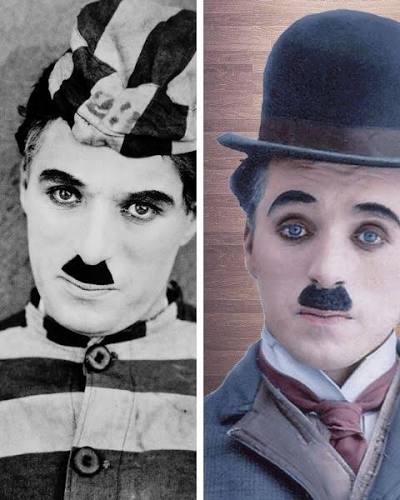
Charlie Chaplin was an English actor, filmmaker, composer, and producer who became one of the most prominent figures of twentieth-century cinema. His career included silent films, sound films, and major productions such as The Kid, The Gold Rush, City Lights, Modern Times, and The Great Dictator.
Alongside his professional achievements, Chaplin's private life became the subject of repeated public controversy. His relationships with younger women, four marriages, divorce proceedings, a paternity dispute, a federal criminal prosecution, and an extensive investigation by the Federal Bureau of Investigation contributed to a complicated public record.
Chaplin married Mildred Harris in 1918. Chaplin was 29 and Harris was a teenager. Their son, Norman Spencer Chaplin, was born in 1919 and died three days later. The couple separated and divorced in 1920. Harris made allegations concerning Chaplin's conduct during the divorce proceedings, although allegations made in a legal complaint should be distinguished from findings established by a court.
In 1924, Chaplin married Lita Grey in Mexico. Chaplin was 35 and Grey was 16. Grey became pregnant and gave birth to two sons, Charles Spencer Chaplin Jr. and Sydney Earl Chaplin. The marriage ended in a highly publicized divorce in 1927. Grey's divorce complaint contained numerous allegations concerning Chaplin's conduct. The proceedings resulted in a substantial financial settlement, with Grey receiving $625,000 and a $200,000 trust being established for the children.
Chaplin's third marriage was to actress Paulette Goddard. Goddard was an adult during their relationship. Chaplin and Goddard worked together on Modern Times and remained associated during the 1930s and early 1940s. Accounts differ concerning the precise legal circumstances of their reported marriage, including the date and location of the ceremony.
In 1943, Chaplin married Oona O'Neill, the daughter of playwright Eugene O'Neill. Chaplin was 54 and O'Neill was 18. The couple remained married until Chaplin's death and had eight children together. Their age difference attracted public attention at the time, and Eugene O'Neill reportedly ended contact with his daughter following the marriage.
Another major controversy involved actress Joan Barry. Chaplin met Barry in 1941, when she was in her early twenties. Their relationship continued into 1942, and Barry later gave birth to a daughter, Carol Ann. Barry identified Chaplin as the child's father, while Chaplin denied biological paternity.
The paternity dispute resulted in a civil court proceeding in California. Blood-type evidence presented during the case indicated that Chaplin could not have been the biological father. Nevertheless, the court ordered Chaplin to provide financial support for the child under the legal standards applicable at the time.
The Barry affair also resulted in a federal criminal prosecution. Chaplin was charged under the Mann Act, which prohibited the transportation of women across state lines for prostitution or other prohibited immoral purposes. Prosecutors alleged that Chaplin had transported Barry for such a purpose. Chaplin denied the allegations.
Chaplin's Mann Act trial took place in Los Angeles in 1944. The prosecution attracted extensive newspaper coverage and further damaged Chaplin's public reputation. On April 4, 1944, Chaplin was acquitted of the federal charges.
The Joan Barry controversy did not end with the criminal trial. The paternity case, child-support order, and Mann Act prosecution remained associated with Chaplin's public image for the remainder of his career in the United States.
Chaplin was also investigated extensively by the FBI. The investigation focused in part on his political views and alleged connections to communism. FBI files accumulated information from informants, newspaper reports, political organizations, and other sources. Later examinations of the files have noted that allegations of Communist Party membership were not supported by conclusive evidence establishing that Chaplin was a Communist Party member.
Chaplin's political reputation became increasingly controversial during the 1930s and 1940s. His 1940 film The Great Dictator satirized Adolf Hitler and Nazi Germany. Chaplin also publicly supported the Allied war effort and advocated opening a second front against Germany during World War II. His political statements and associations attracted criticism during the emerging Cold War.
Chaplin never became a United States citizen, although he lived and worked in the country for many years. His political views, public statements, personal controversies, and the FBI investigation contributed to increasing scrutiny of his status in the United States.
In September 1952, Chaplin left the United States to attend the European premiere of Limelight. While he was traveling, his permission to return to the United States was revoked. American authorities required him to appear before an immigration board to address allegations concerning his political views and moral character. Chaplin chose not to return to the United States at that time.
Chaplin subsequently settled in Switzerland with Oona O'Neill and their children. He continued making films and other creative work in Europe. He returned to the United States in 1972 after receiving an honorary Academy Award for his contributions to cinema.
Chaplin's personal history has therefore been examined through several different types of records, including marriage and divorce proceedings, contemporary newspaper reports, court documents, federal investigative files, autobiographical accounts, and later biographies. The evidence varies considerably from one episode to another.
The marriages to Mildred Harris and Lita Grey involved teenage brides and substantial age differences. His marriage to Oona O'Neill also involved a teenage bride, although O'Neill was 18 when they married. Paulette Goddard was an adult and should not be grouped with the teenage marriages.
The legal controversies involving Chaplin produced different outcomes. Allegations made during divorce proceedings were not equivalent to criminal convictions. The Joan Barry paternity proceeding resulted in a child-support order despite blood-type evidence presented by Chaplin's defense, while the separate Mann Act prosecution ended with Chaplin's acquittal.
Chaplin died on December 25, 1977, at his home in Corsier-sur-Vevey, Switzerland. He was 88. His death ended a career that had lasted more than six decades and had included both international recognition for his filmmaking and prolonged controversy surrounding his private life and political views.
Chaplin's historical record consequently contains two distinct dimensions: his major influence on cinema and a series of personal, legal, and political controversies that affected his public reputation. A complete account of his life requires distinguishing documented events, court decisions, contemporary allegations, and later interpretations.
A report published by the Jewish Telegraphic Agency stated that Albert Einstein described Charlie Chaplin as “half Jewish” and said that Chaplin's grandfather was Jewish. The report concerned Chaplin's family ancestry rather than his religious practice or personal identification. Because the information comes from a historical report attributed to Einstein, it is more appropriately presented as a contemporary claim about Chaplin's ancestry rather than as definitive evidence of his religious identity.