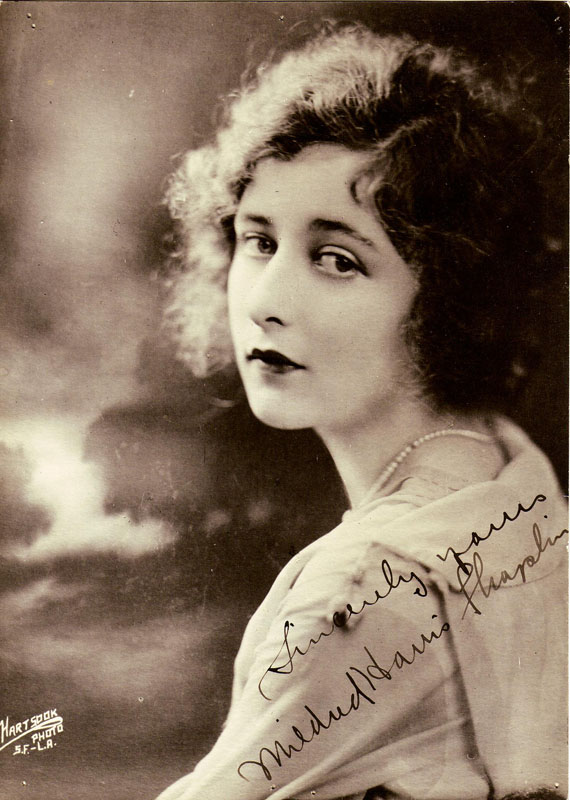
Joan Barry was an American actress who became involved with Charlie Chaplin during the early 1940s. Their relationship later resulted in a highly publicized paternity dispute and a criminal prosecution of Chaplin under the Mann Act.
Barry was born Mary Louise Gribble in 1920. She later adopted the professional name Joan Barry and pursued an acting career. She met Chaplin in 1941, when she was in her early twenties and Chaplin was in his early fifties.
Chaplin and Barry became involved in a relationship, and Chaplin provided financial assistance to her while she pursued acting opportunities. Their relationship became increasingly difficult during 1942 and 1943.
In October 1942, Barry gave birth to a daughter named Carol Ann. Barry identified Chaplin as the child's father and subsequently sought financial support from him. Chaplin denied that he was the biological father.
A paternity proceeding followed in California. Blood-type testing was introduced as evidence during the case. The testing did not establish Chaplin as the biological father, but the court nevertheless ruled against him under the legal standards applicable at the time.
In April 1944, a Los Angeles court ordered Chaplin to provide financial support for Carol Ann. Chaplin was required to make payments for the child despite his continuing denial of biological paternity.
The paternity case received extensive newspaper coverage because Chaplin was one of the most recognizable figures in the film industry. The proceedings also occurred during a period when Chaplin's private life and political views were receiving increased public attention.
The dispute with Barry was followed by a separate federal prosecution. In 1944, Chaplin was charged under the Mann Act, a federal law that prohibited transporting women across state lines for purposes of prostitution or other criminal sexual activity. Prosecutors alleged that Chaplin had transported Barry from California to New York for an immoral purpose.
Chaplin denied the criminal allegations. The trial took place in 1944 in federal court in Los Angeles. Barry testified for the prosecution, while Chaplin's defense challenged the government's allegations and evidence.
On April 4, 1944, Chaplin was acquitted of the Mann Act charges. The verdict did not resolve the separate question of biological paternity, which remained governed by the earlier civil proceedings.
The legal controversies had consequences for Chaplin's public reputation in the United States. The paternity dispute and criminal trial were widely reported and contributed to continuing scrutiny of his personal life.
The case also occurred during a period of broader controversy surrounding Chaplin. He had been criticized for his political views and his refusal to become a United States citizen, although he had lived and worked in the country for decades. These issues became increasingly prominent in public discussions about him during the 1940s.
Chaplin continued his film career after the trial. He released Monsieur Verdoux in 1947 and later left the United States while traveling to Europe in 1952. His departure was followed by a prolonged period in which he lived primarily in Switzerland.
Carol Ann Ryskind, the daughter at the center of the paternity dispute, was legally recognized as Chaplin's daughter for purposes of the support order. Chaplin continued to deny that he was her biological father.
The Joan Barry case is distinct from Chaplin's marriages. Barry was not Chaplin's wife, and the dispute did not involve a marriage between them. It is nevertheless an important episode in accounts of Chaplin's personal and legal history because it involved a paternity proceeding, a court-ordered financial obligation, and a federal criminal prosecution.
The historical record concerning the case includes court proceedings, contemporary newspaper reports, testimony, legal documents, and later biographical accounts. The biological paternity of Carol Ann remained disputed by Chaplin, while the civil court imposed financial obligations on him regardless of the blood-test evidence presented during the proceedings.