The Master Timeline
Event Timeline body { font-family: Arial, sans-serif; background-color: #f4f4f9; margin: 0; padding: 0; } .timeline-container { max-width: 900px; margin: 50px auto; p...
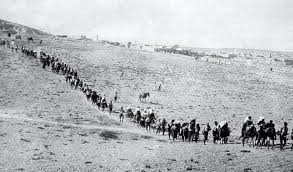
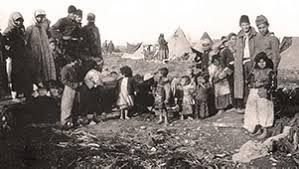
Pontic Greek Genocide On May 19, 1919, military operations intensified against Greek communities in the Pontus region along the Black Sea coast of the Ottoman Empire. The campaign formed...
Greek Genocide On May 19, 1919, Greek communities in the Pontus region of the Ottoman Empire faced intensified military operations during the final phase of systematic persecution that b...
6 September 1914 — French and British forces begin the counteroffensive known as the First Battle of the Marne. The German advance toward Paris is halted and German armies withdraw toward...
September–November 1914 — After the Marne, both sides repeatedly attempt to turn the other's flank. The maneuvering eventually reaches the North Sea and creates a largely continuous forti...
August–September 1914 — Germany concentrates major forces against France and advances through Belgium. The operational scheme derives from years of German planning associated with Alfred ...
28 July–4 August 1914 — European armies activate enormous prearranged railway timetables to mobilize millions of soldiers. Military planners argue that delaying mobilization could allow a...
7–23 July 1914 — Austro-Hungarian leaders debate how to transform the Sarajevo assassination into a confrontation with Serbia. Officials increasingly favor demands severe enough to justif...
July 1914 — Russian leaders view Serbia as both a political partner and a test of Russian great-power credibility in the Balkans. Previous retreats in regional crises make another diploma...
28 June–4 August 1914 — Sarajevo creates the crisis, but successive decisions by Austria-Hungary, Germany, Russia, France and Britain determine how far it spreads. The investigation shoul...
May–June 1914 — Members of the assassination conspiracy obtain pistols, bombs and assistance through contacts associated with Serbian nationalist and military-intelligence circles. The ev...
7 March 1914 — Prince Wilhelm of Wied arrives at Durrës to rule Albania. Political rebellion and the approaching European war quickly overwhelm the fragile administration. He leaves Alban...
1914–1918 — Austro-Hungarian, Italian, French, Serbian and other forces occupy different parts of Albania. The country largely loses unified central government during the conflict, and it...
1914–1919 — The Royal Navy progressively restricts German access to food, fertilizer, metals, chemicals and overseas trade. Neutral shipping is increasingly subjected to Allied controls. ...
1914–1919 — Room 40 is the British Admiralty's cryptanalytic organization responsible for intercepting and decoding important German communications. Its intelligence contributes to Britis...
1914–1918 wartime production — DuPont becomes one of the most striking American industrial beneficiaries of wartime demand because explosives and propellants are required on an unpreceden...
1914–1917 Allied purchasing and finance role — J.P. Morgan & Co. becomes a major financial and purchasing intermediary for Britain and France in the United States during American neutrali...
1914–1918 wartime production — Krupp is one of Germany's most important heavy industrial and armaments firms. The company supplies artillery, steel products and other military equipment r...
1914–1919 wartime role — Britain's navy protects imperial shipping routes, contains the German High Seas Fleet and implements the maritime blockade of the Central Powers. Its strategic va...
1914–1918 wartime production — Schneider is a major French heavy-industrial and armaments producer whose factories supply artillery and military material to the French war effort. Industr...
Untitled1914–1918 — Industrial warfare requires food, coal, metals, chemicals, credit and shipping on unprecedented scales. Britain attempts to deny overseas resources to Germany through ...
1914–1918 wartime production — British engineering and armaments company Vickers becomes an important supplier of guns, ammunition, ships and other military equipment during the war. Enor...
1914–1918 — Armaments companies, explosives producers and other industrial suppliers receive enormous wartime orders. Some businesses benefit heavily while others suffer from disruption a...
1912–1914 — Officials in Germany and Austria-Hungary increasingly fear that Russia and Serbia will become stronger with time. Railway construction, military reforms, population growth and...
1908–1914 — Austria-Hungary faces growing nationalist pressures in the Balkans following the Bosnian annexation crisis and Serbia's expansion during the Balkan Wars. Serbian national ambi...
1905–1914 — German military planning assumes that simultaneous war against France and Russia creates a dangerous strategic problem. Geography places Germany between both opponents. German...
1904–1914 — Britain has no automatic obligation to enter every Franco-German conflict, but strategic cooperation with France has grown while German naval expansion generates anxiety. A Ge...
1894–1914 — France and Russia are formally allied, while Britain develops strategic understandings with France and Russia. Germany remains closely aligned with Austria-Hungary. Alliances ...
28 June 1914 — Archduke Franz Ferdinand, heir to the Austro-Hungarian throne, and his wife Sophie are assassinated during an official visit to Sarajevo. Gavrilo Princip, a Bosnian Serb as...
28 July 1914 — Austria-Hungary declares war on Serbia exactly one month after the Sarajevo assassination. Artillery soon targets Belgrade. What Vienna hopes to treat as a decisive Balkan ...
23 July 1914 — Austria-Hungary presents Serbia with a severe ultimatum designed to suppress anti-Habsburg activity and permit substantial Austro-Hungarian involvement in Serbian investiga...
26 August 1914 — German forces under Paul von Hindenburg and Erich Ludendorff begin the decisive phase of the Battle of Tannenberg against Russia's Second Army in East Prussia. German com...
4 August 1914 — Britain declares war on Germany after German forces invade neutral Belgium and Berlin fails to meet the British demand for Belgian neutrality to be respected. Britain's de...
1914–1916 as German Chief of General Staff — Falkenhayn takes command after the failure of Germany's initial western offensive. He increasingly concludes that Germany may not achieve a cl...
1906–1917 senior military influence — Conrad serves as chief of the Austro-Hungarian General Staff for most of the years preceding and during the early war. Before 1914 he repeatedly advo...
Bosnian Serb nationalist who assassinated Franz Ferdinand and Sophie in Sarajevo on 28 June 1914.
3 August 1914 — Germany declares war on France while German forces move through Luxembourg and prepare to enter Belgium. German planners seek a rapid defeat of France before Russian milit...
1 August 1914 — Germany declares war on Russia after demanding that Russian mobilization stop. German military planning assumes that a war with Russia will also involve France. Berlin the...
5 July 1914 — Austro-Hungarian envoy Alexander Hoyos receives powerful assurances in Berlin that Germany will support Vienna if it acts against Serbia, even if Russian intervention widens...
1914–1918 wartime production — Krupp is one of Germany's most important heavy industrial and armaments firms. The company supplies artillery, steel products and other military equipment r...
29 October 1914 — Ottoman naval forces attack Russian Black Sea ports, bringing the Ottoman Empire into the conflict alongside Germany and Austria-Hungary. Russia declares war shortly aft...
30 July 1914 — Tsar Nicholas II approves general mobilization of Russian forces after growing alarm over Austria-Hungary's attack on Serbia. Russian leaders fear that partial mobilization...
25 July 1914 — Serbia submits a conciliatory reply accepting most Austro-Hungarian demands while rejecting or qualifying provisions that would allow foreign officials to exercise authorit...
1914–6 April 1917 — American trade and finance become increasingly connected with the Allied economies, but German submarine warfare repeatedly challenges American maritime policy. The Zi...