Media coverage and public recognition of serial homicide have been examined by criminologists and researchers studying race, victim demographics, offender characteristics, and news reporting. Research has identified differences in how serial killers and their victims are represented in American media, while individual cases demonstrate that public attention can vary substantially according to the circumstances of a crime, the identities of victims and offenders, the availability of information, and the ability of investigators to connect separate cases.
One area of research concerns the public perception of serial killers as predominantly white men. A 2005 study by criminologist Anthony Walsh examined 413 serial killers operating in the United States between 1945 and the middle of 2004. The study identified 90 African American serial killers and examined possible reasons why comparatively few had become well known to the public. Walsh concluded that African American serial killers were substantially less represented in popular awareness than their presence in his research sample would suggest.
Allan L. Branson examined a similar issue in a 2012 study published in The Howard Journal of Criminal Justice. Branson argued that African American serial killers have been underacknowledged in American popular culture and compared media treatment of Black and white multiple murderers. His work proposed that historical assumptions about the typical serial killer, together with media practices and the commercial treatment of notorious offenders, may contribute to differences in public recognition. The study also acknowledged limitations in the available data and treated some of its comparisons as case studies rather than definitive measurements of all media coverage.
Research on crime reporting more generally has also found racial differences in the presentation of victims and offenders. Studies of television news have examined whether racial and ethnic groups are represented proportionately to their presence in crime statistics and whether people of different racial backgrounds are more frequently portrayed as victims or perpetrators. These findings do not establish a single explanation for media coverage of serial murder, but they provide a broader context for studying how race can influence crime reporting.
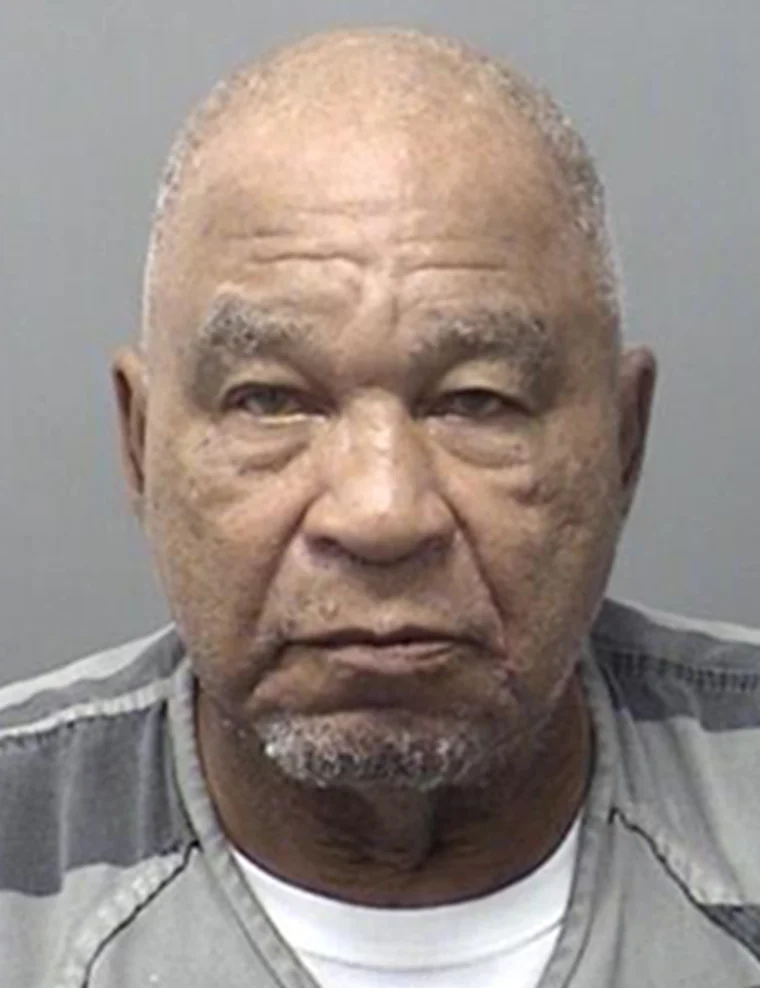
The case of Samuel Little provides a documented example of the difficulty of identifying a serial offender whose victims were frequently vulnerable women. The Federal Bureau of Investigation reported that Little confessed to 93 murders committed between 1970 and 2005 and that investigators had verified 50 confessions by October 2019. Many of the deaths had originally been classified as overdoses, accidents, or deaths of undetermined cause, while some victims remained unidentified or had never been recovered.
The FBI stated that Little's victims were nearly all women and that many were marginalized or vulnerable. Investigators reported that some victims were involved in prostitution or struggled with drug addiction. The circumstances surrounding their lives and deaths sometimes made it difficult for authorities to determine that separate killings were connected. Little also moved frequently between states, creating additional jurisdictional difficulties for investigators.
The FBI's Violent Criminal Apprehension Program, known as ViCAP, became important in connecting cases associated with Little. Analysts compared his confessions with homicide records from different jurisdictions. The investigation demonstrated how information that remained separated among local police departments could later be connected through federal analysis, forensic evidence, victim identification, and cooperation between agencies.
The Little investigation also illustrates why victim demographics can matter when examining unresolved homicide cases. The FBI specifically noted that the characteristics of Little's victims, his methods, his mobility, and the uncertainty surrounding some of his confessions created challenges for investigators. These circumstances do not establish that authorities ignored particular victims because of their race, gender, or occupation, but they demonstrate how victim circumstances can affect the visibility and investigation of homicide cases.
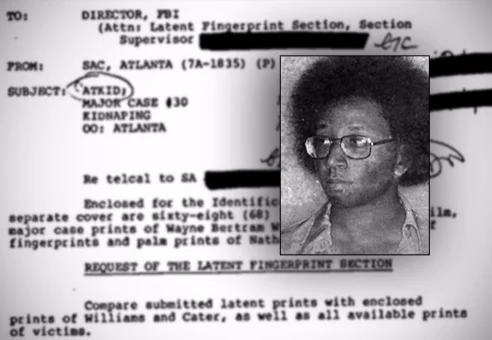
The Atlanta Child Murders provide a different example involving predominantly Black victims. Between 1979 and 1981, approximately 29 African American children, teenagers, and young adults were murdered in the Atlanta area. The FBI became involved in the investigation in 1980, and Wayne Williams was arrested in 1981. Williams was convicted of two murders in 1982, and the law enforcement task force subsequently concluded that evidence linked him to 20 additional deaths.
The Atlanta investigation demonstrates that large-scale public attention can occur when victims belong to a historically marginalized population. The disappearances generated substantial concern in Atlanta, produced racial tensions, and resulted in a multi-agency investigation involving local, state, and federal authorities. The FBI's historical account states that all of the victims were African American and that the investigation involved extensive investigative resources.
The legal status of the Atlanta cases also illustrates the importance of distinguishing convictions from investigative conclusions. Wayne Williams was convicted of two murders. Authorities subsequently concluded that evidence connected him to 20 additional deaths, but those additional cases did not result in separate murder convictions. A factual account therefore distinguishes what was established in court from what investigators concluded after examining the broader series.
The Zebra murders provide another distinct example in which race was central to the alleged motive rather than simply a characteristic of the victims. A series of killings and shootings occurred in San Francisco between 1973 and 1974, and prosecutors alleged that white victims were deliberately selected by Black perpetrators because of their race. Four men were ultimately convicted in connection with the killings. Unlike the Samuel Little and Atlanta cases, racial targeting was an explicit part of the prosecution's account of the Zebra murders.
Comparing these cases demonstrates why race should not automatically be treated as the explanation for every difference in crime coverage or investigative attention. In the Zebra murders, race was directly connected to the alleged motive. In the Atlanta Child Murders, the victims were predominantly African American, but the FBI's historical account states that the murders had no obvious motivation when investigators initially assessed the common characteristics. In the Samuel Little investigation, victim vulnerability and the geographic dispersion of the crimes were among the factors identified by investigators as complicating case identification.
Media visibility is also different from law enforcement attention. A homicide can receive extensive investigative resources without becoming a lasting part of popular culture, while another case can receive sustained media attention long after the criminal investigation has ended. Public recognition can be influenced by books, films, television programs, documentaries, online communities, unusual investigative circumstances, photographs, available records, and the identity of the offender or victims.
The concept of serial-killer celebrity has therefore become a subject of criminological and media research. Branson's research specifically examined how certain white serial killers became enduring cultural figures while comparatively little public recognition developed around many African American serial killers. His study argued that media portrayals can influence which offenders become recognizable historical figures, while also noting the limited statistical evidence available for measuring the full extent of the disparity.
Victim recognition presents a related issue. In cases involving unidentified victims, missing persons, transient populations, sex workers, people experiencing homelessness, or people affected by substance use, investigators may face fewer reliable records and fewer people able to report a disappearance. These circumstances can complicate identification and delay the discovery of connections between cases. They should not, however, be treated as proof that authorities intentionally assigned less value to particular victims without case-specific evidence.
The development of national databases and interagency information sharing has changed the investigation of serial homicide. ViCAP was established to help law enforcement agencies identify relationships among violent crimes occurring in different jurisdictions. The Samuel Little investigation demonstrated the potential value of comparing older homicide cases with information obtained decades later from a known offender.
The study of media disparities also requires attention to the difference between news reporting and entertainment. A serial killer may receive limited contemporary news coverage but later become widely known through books, films, television series, podcasts, or documentaries. Conversely, a case can receive substantial local coverage without developing the national cultural recognition associated with more heavily dramatized offenders.
Researchers therefore generally treat race, gender, victim status, offender characteristics, news values, geography, investigative practices, and cultural representation as potential factors rather than assuming that one variable determines coverage. Studies by Walsh and Branson provide evidence for differences in the public recognition of African American serial killers, while broader media research demonstrates that racial representation in crime reporting can vary according to whether people are presented as victims or offenders.
The cases of Samuel Little, Wayne Williams, and the Zebra murders provide three different contexts for examining these questions. Little's victims were predominantly vulnerable women whose deaths were sometimes classified in other ways before being connected to him. Williams was convicted of two murders within a larger series involving African American victims, while investigators attributed additional killings to him. The Zebra murders involved allegations of deliberate racial targeting. Taken together, the cases demonstrate why serial homicide should be examined through individual evidence rather than assumptions about race, victims, offenders, or media attention.
Continued research into unsolved homicides, missing persons, unidentified remains, and historical crime reporting can provide additional information about how cases become recognized or overlooked. The identification of previously unknown victims can also change the historical understanding of a serial offender. The continuing investigation of Samuel Little's confessions illustrates how modern forensic methods, national databases, and cooperation between agencies can revisit cases that remained unresolved for many years.