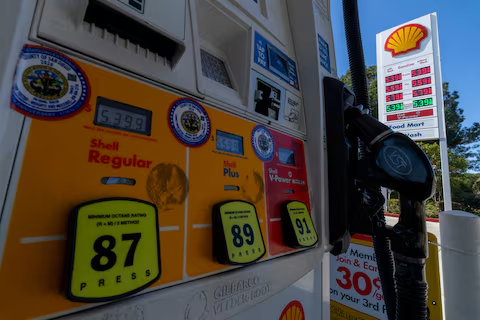
Oil prices rose by more than four dollars per barrel on September 1, 2026, after renewed military exchanges between the United States and Iran increased concerns about energy supplies from the Middle East.
Brent crude futures increased by 4.16 dollars, or approximately 4.6 percent, to settle at 94.65 dollars per barrel. United States West Texas Intermediate crude increased by 4.46 dollars, or approximately 5.2 percent, to settle at 90.22 dollars per barrel.
The increases brought both benchmarks to their highest closing levels in approximately five weeks. Traders responded to renewed U.S. attacks on Iranian targets and the possibility of additional disruption to shipping and petroleum exports around the Strait of Hormuz.
The price increase also contributed to broader financial market concerns about inflation. Higher energy prices can increase transportation, manufacturing, agricultural, and consumer costs and can influence decisions by central banks concerning interest rates.
Global bond yields also increased during the day as investors considered the combination of higher energy prices, inflation risks, government borrowing requirements, and expectations for monetary policy in the United States, Europe, and Japan.