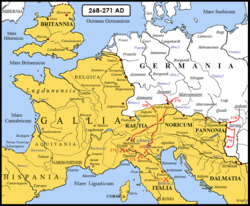
Aurelian's Victory Over the Juthungi
Roman Emperor Aurelian defeated the invading Juthungi tribe near the city of Placentia in northern Italy. This battle was a decisive moment in securing the Roman Empir...
Explore event →History does not happen in isolation. Explore world events across time, follow the connections between them, and investigate the threads that reveal how one event can lead to another.
TheTimeMap currently follows events across 95 countries and 268 years of history — building a connected archive designed for people who want to look beyond the headline.
We oppose antisemitism, racism, and dehumanization — everywhere.
When people stop feeling, injustice becomes easy.
Roman Emperor Aurelian defeated the invading Juthungi tribe near the city of Placentia in northern Italy. This battle was a decisive moment in securing the Roman Empir...
Explore event →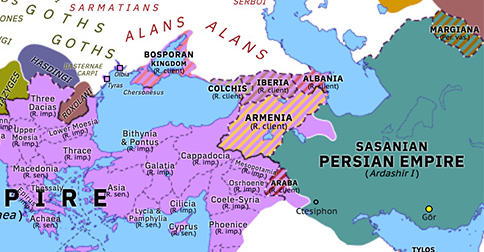
Roman Emperor Valerian launched a military campaign against the Sasanian Empire, aiming to assert Roman dominance over Persian territories. This campaign marks a signi...
Explore event →
Emperor Severus Alexander launched a military campaign against the Sasanian Empire to counter their expansion in Mesopotamia. The Roman forces sought to reclaim lost t...
Explore event →
The Edomites, also known in later sources as Idumeans, were an ancient Semitic people who lived in the region south of Judea, historically associated with the descenda...
Explore event →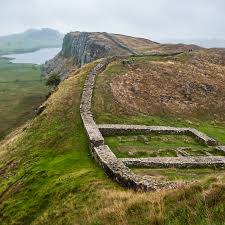
The Roman Empire initiated the construction of Hadrian's Wall to secure its northern boundary in Britannia. This extensive fortification marked the limit of Roman-cont...
Explore event →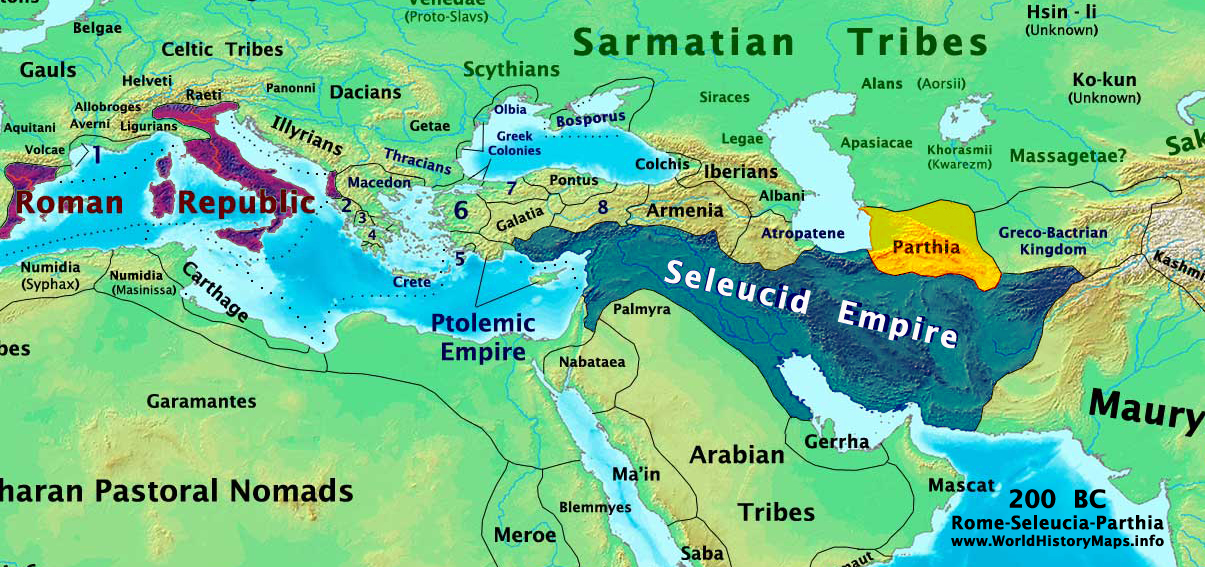
Roman Emperor Trajan launched a military campaign into the Parthian Empire, aiming to expand Roman territory eastward. The campaign marked a major escalation of confli...
Explore event →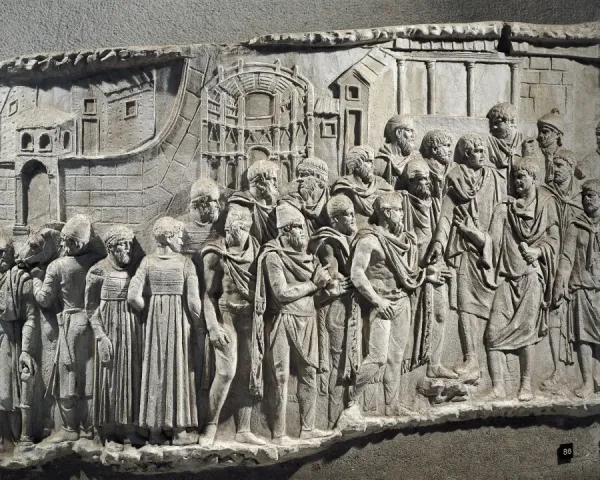
The Roman Empire completed the conquest and annexation of the kingdom of Dacia after a series of military campaigns led by Emperor Trajan. This marked the end of the D...
Explore event →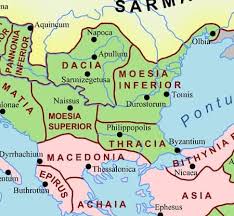
The Second Dacian War marks the renewed conflict between the Roman Empire and the Dacian Kingdom, led by King Decebalus. Roman Emperor Trajan launched a major military...
Explore event →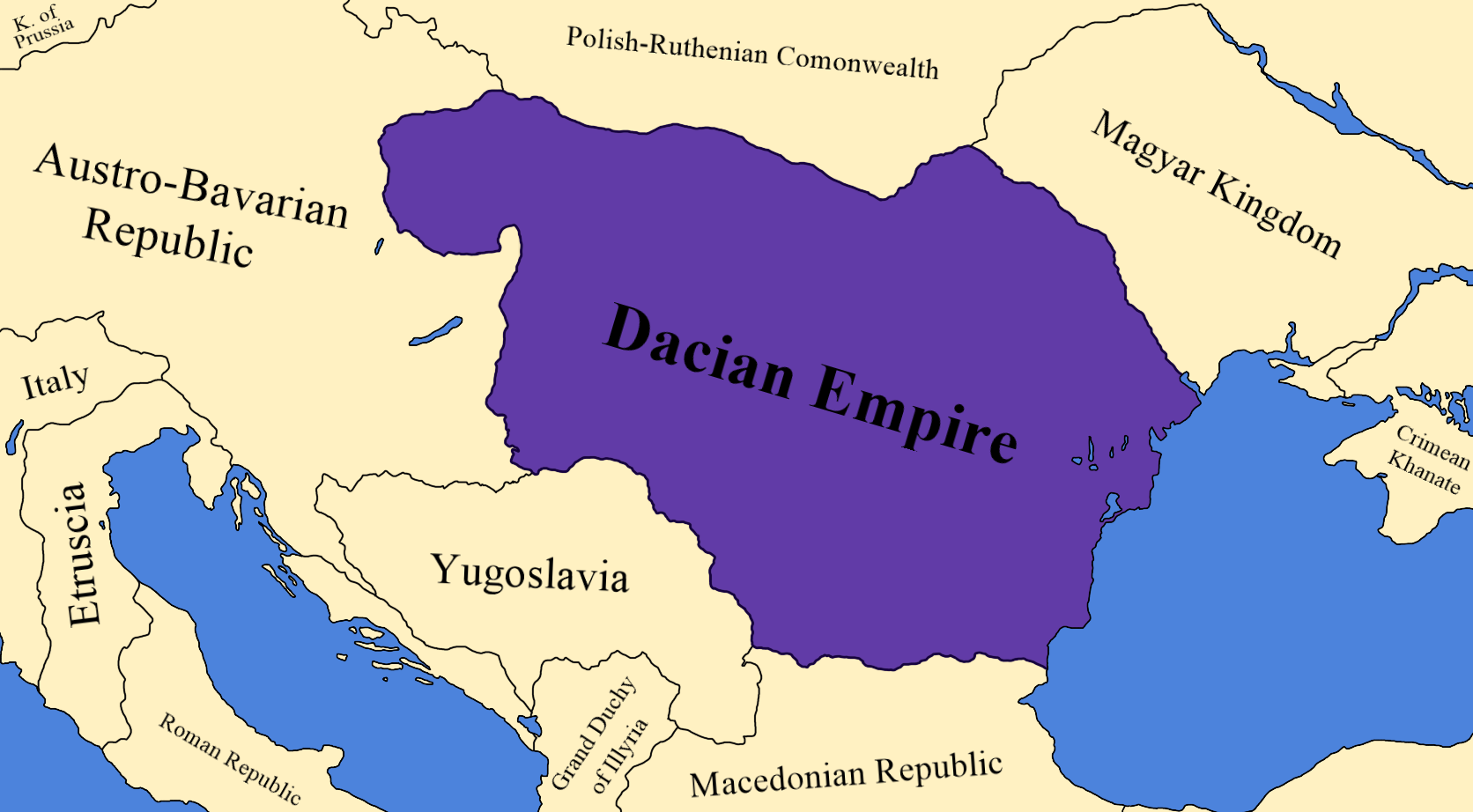
The Roman Emperor Trajan launched his first major military campaign against the Dacian Kingdom in early 101 CE. The war was initiated to subdue the powerful Dacian kin...
Explore event →
June–September 1920 — Albanian fighters challenge Italian forces occupying the Vlorë region. The conflict contributes to an agreement under which Italy withdraws from ...
Explore research
January–June 1919 — France prioritizes security and compensation for destruction. Britain wants Germany constrained without permanently destroying European economic st...
Explore research
c. 6500–5500 BCE — Farming, livestock keeping and permanent villages become established in parts of the territory of modern Albania. Communities increasingly depend on...
Explore research
c. 6500 BCE–2026 CE — The territory and people of modern Albania were shaped by prehistoric Balkan societies, Illyrian political formations, Rome, Byzantium, medieval ...
Explore research
Human communities occupied the territory of modern Albania long before written history. Archaeology reveals Paleolithic activity followed by increasingly settled commu...
Explore research
13 January 1945 — Soviet armies launch major operations into East Prussia. German civilians flee westward amid combat, fear of Soviet forces and collapsing evacuation ...
Explore research
1 October 1941 — German supply systems struggle to sustain armies advancing hundreds of kilometers into Soviet territory. Roads deteriorate in autumn mud, rail gauges ...
Explore research
10 October 1938 — German occupation of the Sudetenland gives Berlin control of major Czech border fortifications and significant industrial territory. The Munich settl...
Explore research
15 March 1939 — German forces occupy Prague and dismantle what remains of Czechoslovakia. The move is politically important because it extends Nazi domination over ter...
Explore research
30 April 1945 — Adolf Hitler kills himself in the Führerbunker as Soviet troops fight through central Berlin. Germany has already lost control of most of its territory...
Explore research
30 September 1938 — Britain, France, Germany and Italy agree that Czechoslovakia must surrender the Sudetenland to Germany. Neville Chamberlain hopes satisfying Hitler...
Explore research
25 July 1943 — King Victor Emmanuel III dismisses Benito Mussolini after the Fascist Grand Council turns against him. Marshal Pietro Badoglio forms a new government th...
Explore research
22 June 1941 — Germany and its allies invade the Soviet Union along an enormous front. Hitler seeks not only military victory but ideological destruction of Soviet com...
Explore research
22 July 1944 — The Soviet-backed Polish Committee of National Liberation presents itself as a new governing authority for liberated Polish territory. The committee cha...
Explore research
4 January 1944 — The Polish Home Army begins implementing Operation Tempest as Soviet forces approach prewar Polish territory. Underground units attempt to fight Germa...
Explore research
9 August 1945 — Soviet forces launch a massive offensive against the Japanese Kwantung Army in Manchuria. The attack follows Soviet commitments made to the Western All...
Explore research
28 June 1919 — Germany and the Allied powers sign the Treaty of Versailles. Germany loses territory, accepts military restrictions and becomes liable for reparations u...
Explore research
12 January 1945 — Soviet armies launch a huge offensive from bridgeheads in Poland. German defenses collapse across much of the front. Soviet forces advance hundreds o...
Explore research
1917–1918 wartime revolutionary leadership — Lenin returns to Russia after the February Revolution and argues for transfer of power to the soviets, withdrawal from the...
Explore research
20 January 1942 — Senior Nazi officials meet near Berlin to coordinate bureaucratic implementation of the so-called Final Solution of the Jewish Question. Mass killing...
Explore research
8 February 1942 — Use the expansion of wartime production as the investigative anchor. Companies in Allied and Axis states received enormous military orders, while the...
Explore research
4 February 1945 — Roosevelt, Churchill and Stalin debate Poland's borders and government at Yalta. The Soviet Union already occupies most Polish territory, giving Stal...
Explore research