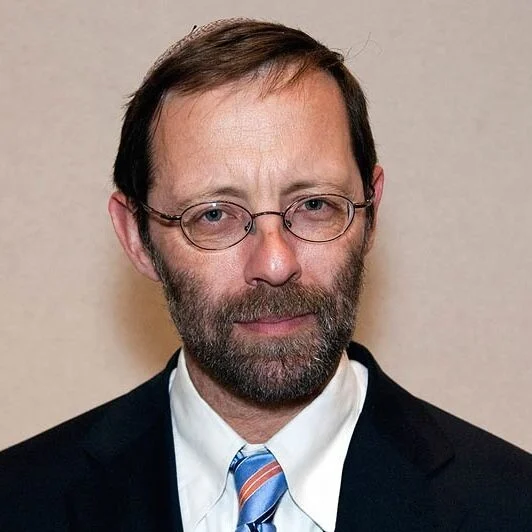
Moshe Feiglin Gaza remarks
Moshe Feiglin, an Israeli politician and former member of the Knesset, has advocated policies involving the displacement of Palestinians from the Gaza Strip. Feiglin i...
Explore event →History does not happen in isolation. Explore world events across time, follow the connections between them, and investigate the threads that reveal how one event can lead to another.
TheTimeMap currently follows events across 95 countries and 268 years of history — building a connected archive designed for people who want to look beyond the headline.
We oppose antisemitism, racism, and dehumanization — everywhere.
When people stop feeling, injustice becomes easy.
Moshe Feiglin, an Israeli politician and former member of the Knesset, has advocated policies involving the displacement of Palestinians from the Gaza Strip. Feiglin i...
Explore event →
American artist Ye, formerly known as Kanye West, held a large concert at SoFi Stadium in Inglewood, California, in March 2026, marking a return to live performance fo...
Explore event →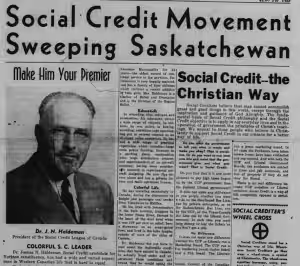
Elon Musk’s grandfather Joshua Haldeman and the Technocracy movement On February 7, 2026, public records and historical sources show that Joshua N. Haldeman...
Explore event →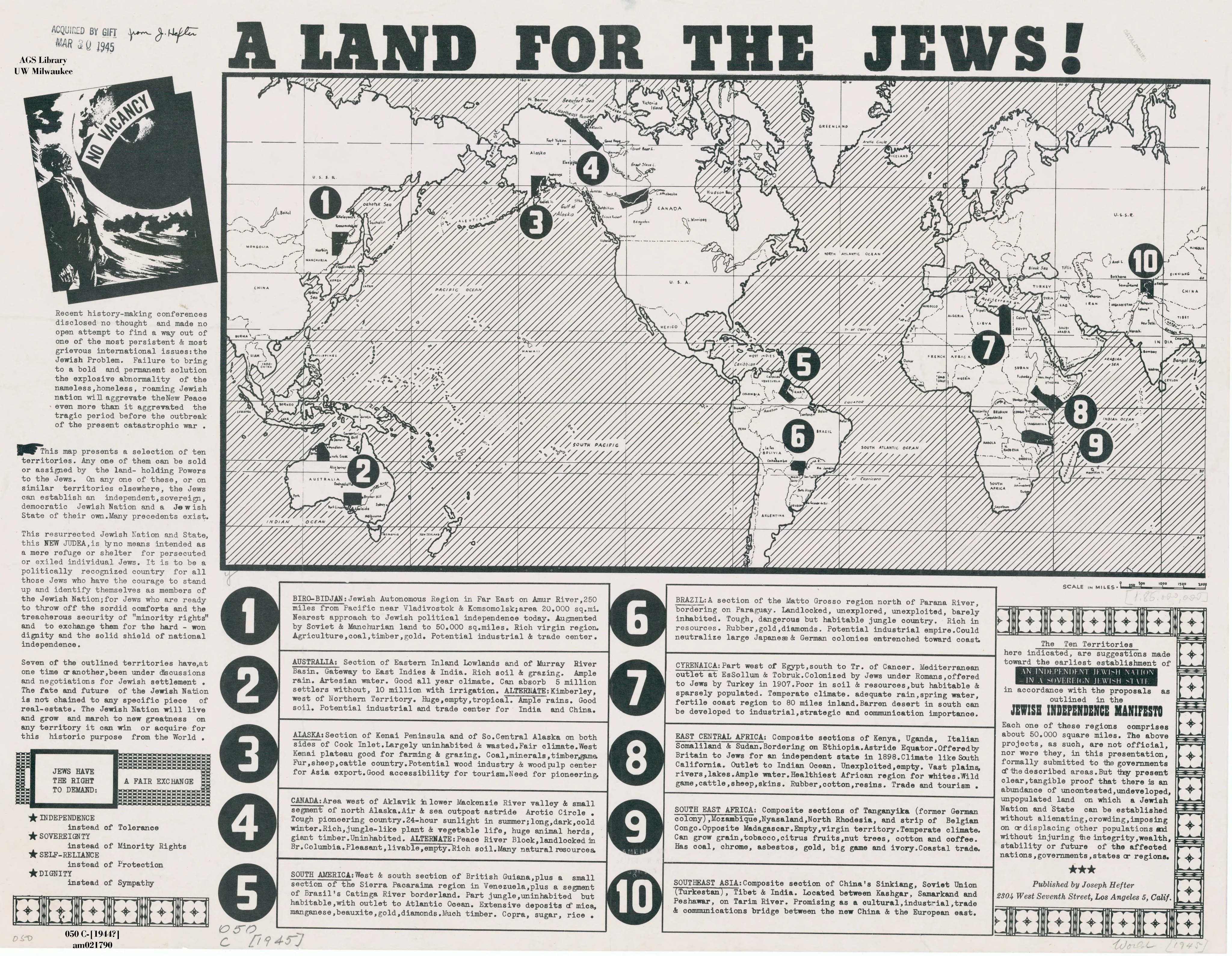
Proposed Jewish Settlements and Local Creation Myths body { font-family: Arial, sans-serif; background-color: #f4f4f9; margin: 0; padding: 0; } .timeline...
Explore event →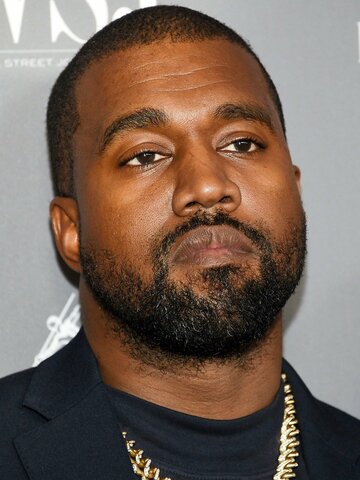
American artist Kanye West, also known as Ye, released a song titled “Heil Hitler” on May 8, 2025, which generated widespread international criticism. The track includ...
Explore event →
Swedish climate activist Greta Thunberg was named "Antisemite of the Week" in September 2024 by the Jewish watchdog group StopAntisemitism following her arrest at an a...
Explore event →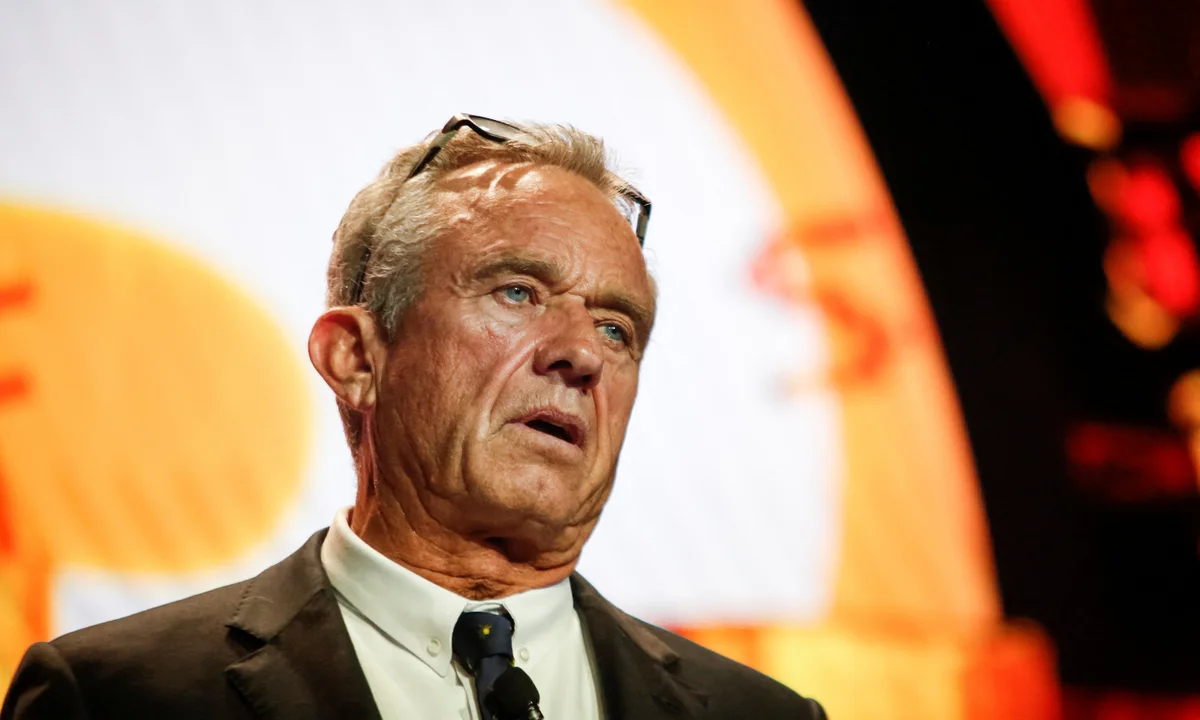
Robert F. Kennedy Jr. made comments on July 15, 2023, at a private event in New York in which he stated that “COVID-19 attacks certain races disproportionately” and su...
Explore event →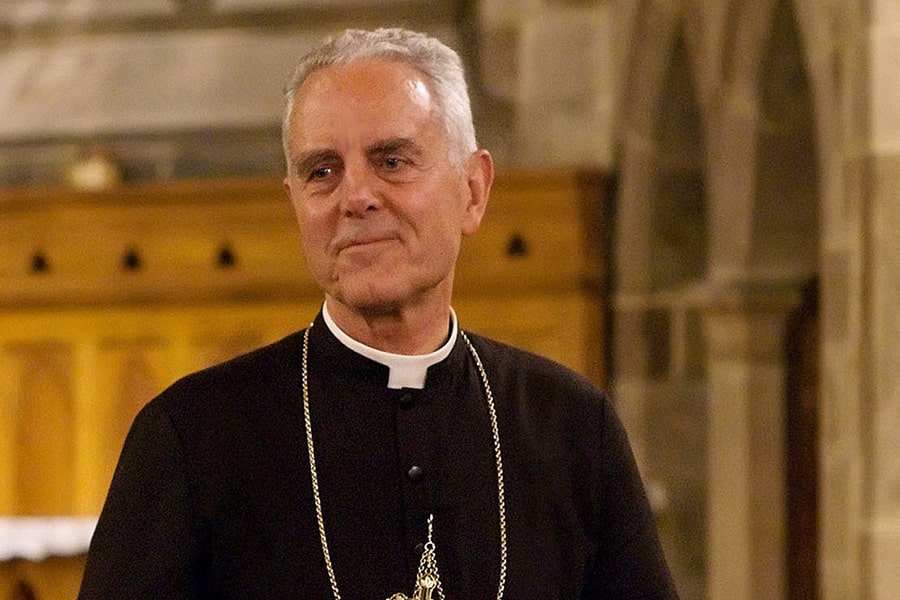
Richard Williamson was a British traditionalist Catholic bishop who became widely known for his involvement in controversies related to the Catholic Church and his pub...
Explore event →
In January 1998, allegations of a sexual relationship between U.S. President Bill Clinton and White House intern Monica Lewinsky became public during an investigation ...
Explore event →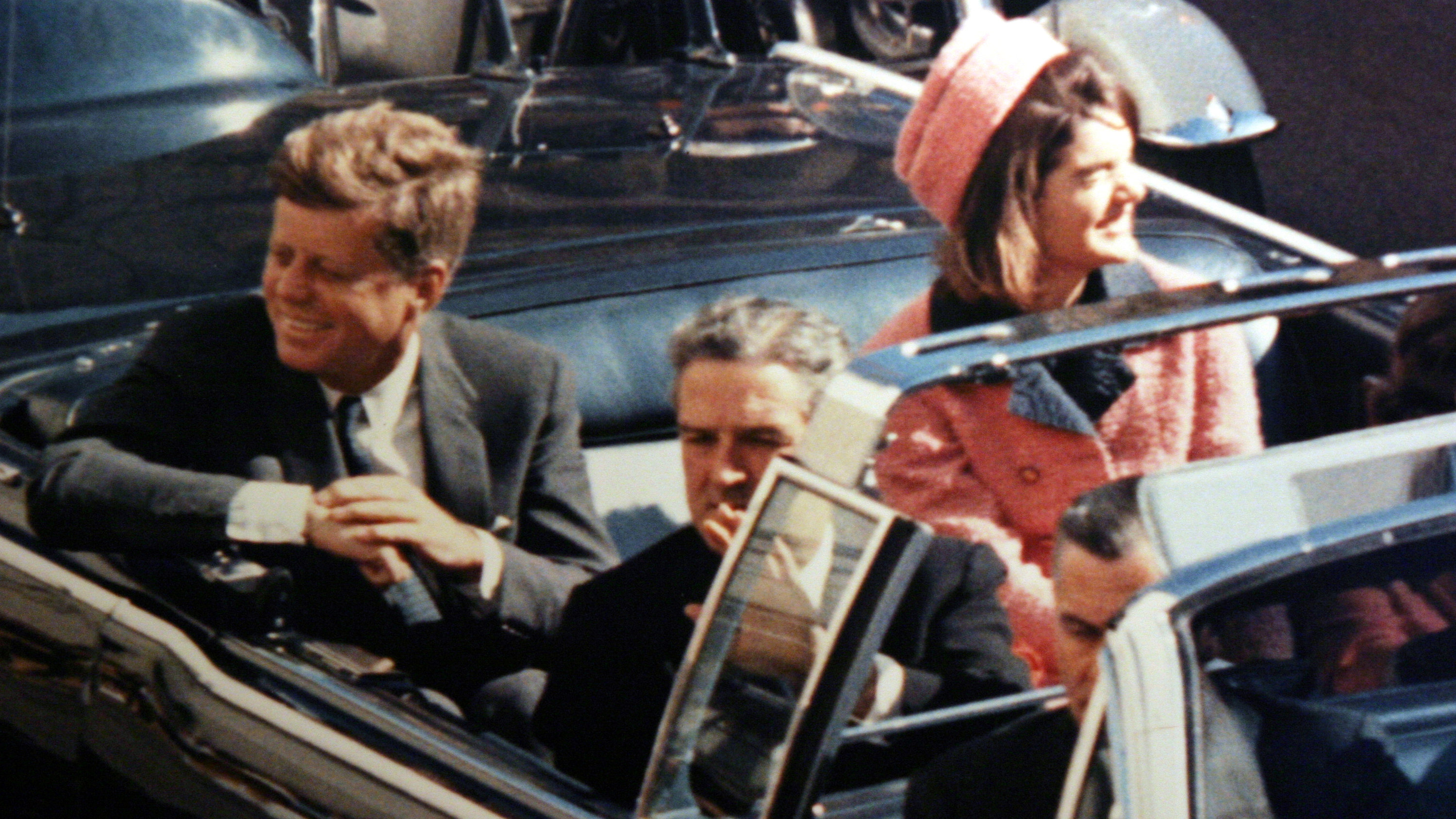
The assassination of John F. Kennedy, the 35th President of the United States, occurred on November 22, 1963, in Dallas, Texas. Kennedy was fatally shot while riding i...
Explore event →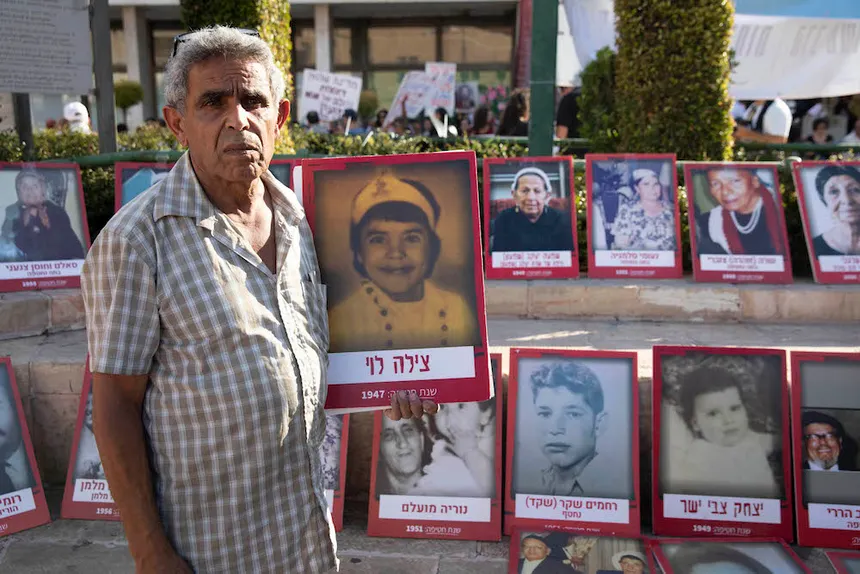
The Yemenite Children Affair refers to a long-running controversy in Israel between 1948 and 1954, involving the disappearance of mainly Yemenite Jewish infants and to...
Explore event →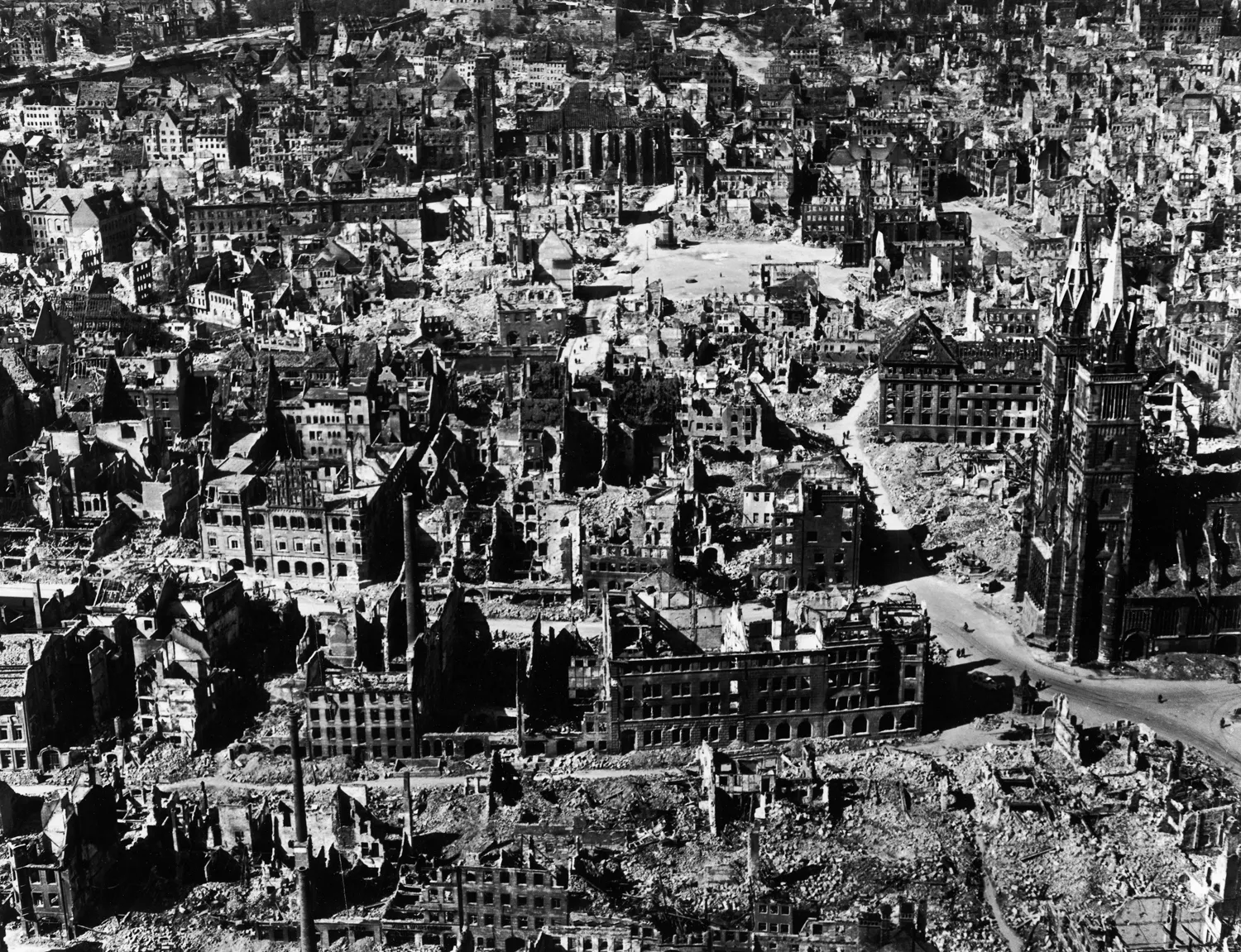
During World War II (1939–1945), the Allied forces of the United States and the United Kingdom carried out a widespread strategic bombing campaign against German citie...
Explore event →.webp)
Victory in Europe (VE) Day marked the official surrender of Nazi Germany to the Allies, ending the war in Europe. Celebrations erupted across Europe and the United Sta...
Explore event →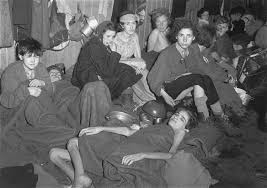
Typhus and Mortality in Nazi Concentration Camps Historical records from the International Committee of the Red Cross (ICRC), Nazi documentation, and post-w...
Explore event →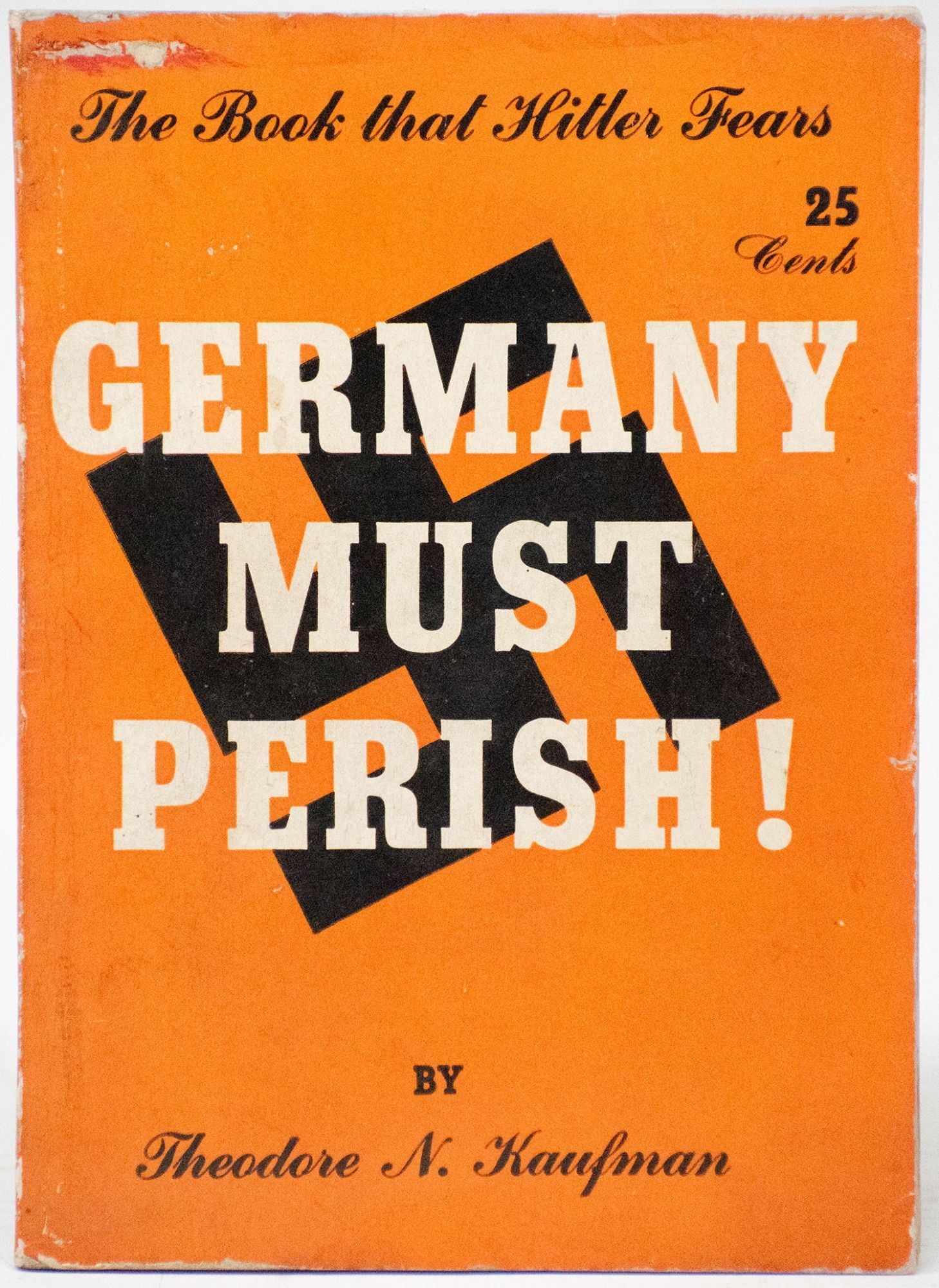
Publication of *Germany Must Perish!* by Theodore Kaufman On February 28, 1941, American author Theodore N. Kaufman self‑published a book titled *Germany Mu...
Explore event →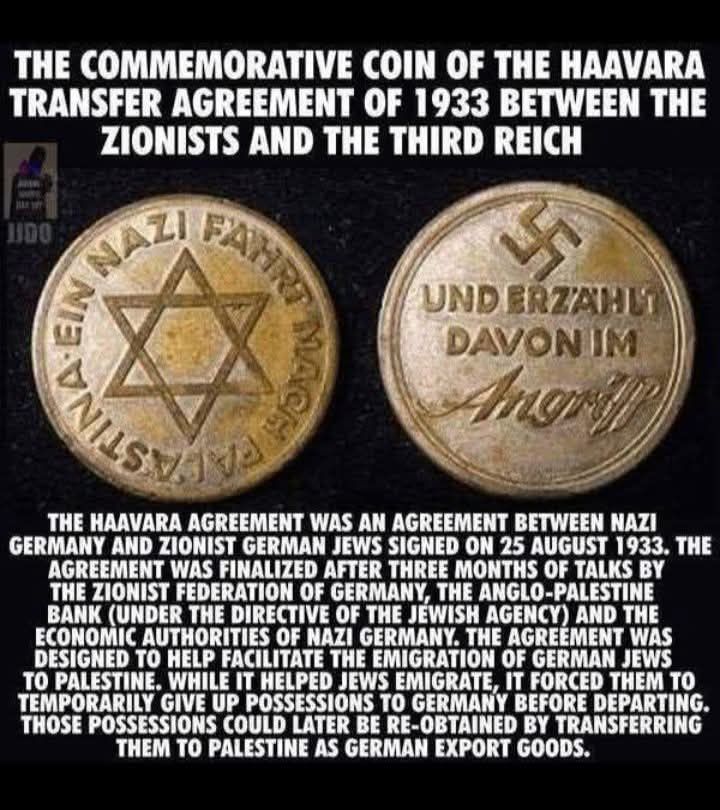
The Haavara (Transfer) Agreement was signed on August 25, 1933, between Nazi Germany and Zionist organizations, including the Jewish Agency. The agreement facilitated ...
Explore event →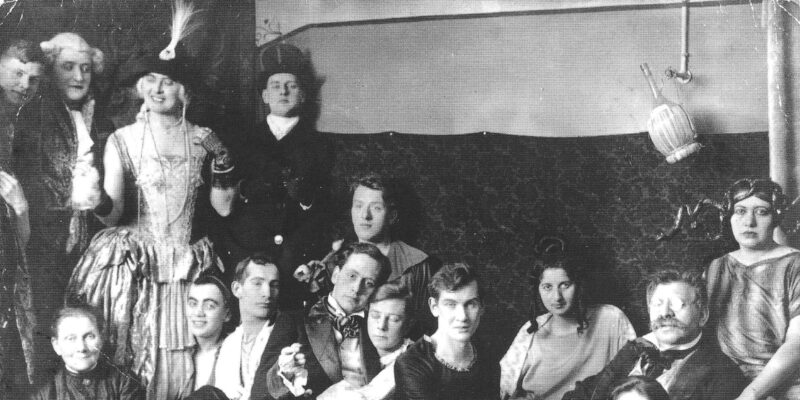
In early 20th century Germany, Berlin was a center for sexual reform and research. Dr. Magnus Hirschfeld (1868–1935), physician and sexologist, a German Jewish doctor,...
Explore event →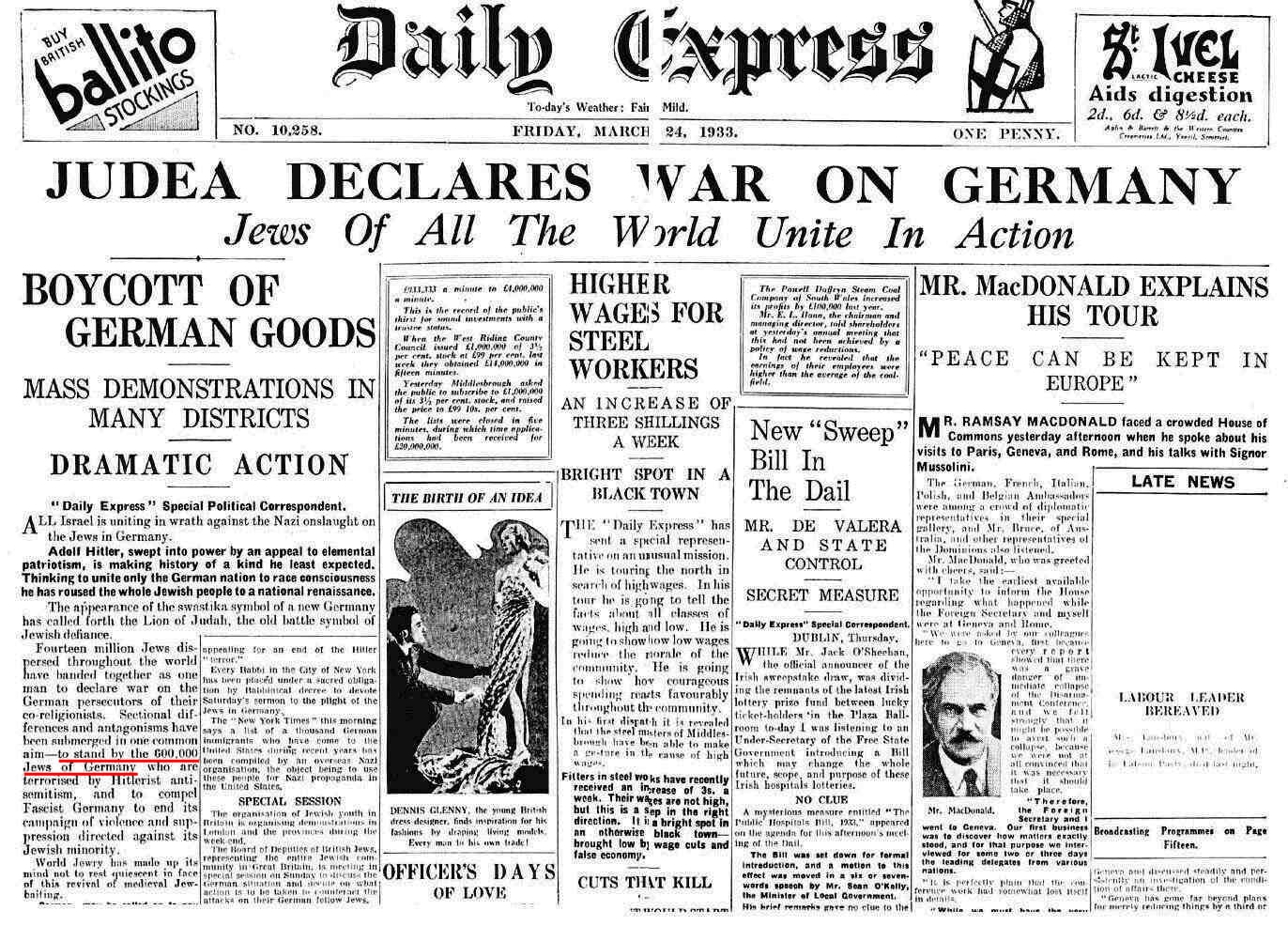
On March 24, 1933, the British newspaper Daily Express published a front-page headline reading “JUDEA DECLARES WAR ON GERMANY: Jews of All the World Unite.” The articl...
Explore event →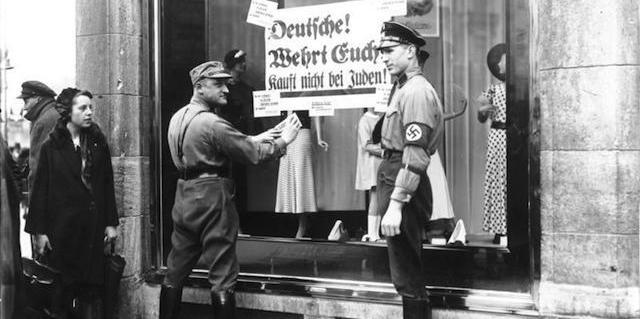
Financial backers of Hitler in 1933 In early 1933, Adolf Hitler received financial support from multiple sources as he rose to power in Germany. Major contributions c...
Explore event →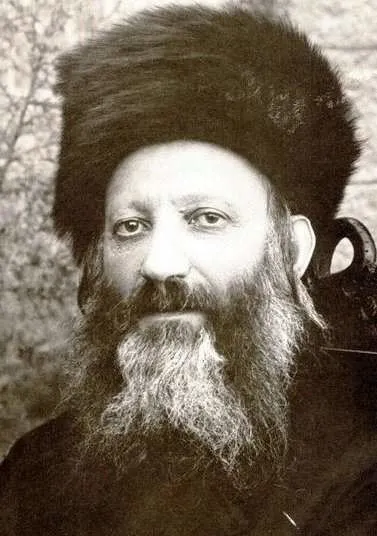
Abraham Isaac Kook (December 9, 1865 – September 1, 1935) was a Jewish religious thinker, rabbi, and the first Ashkenazi Chief Rabbi of British Mandate Palestine. He i...
Explore event →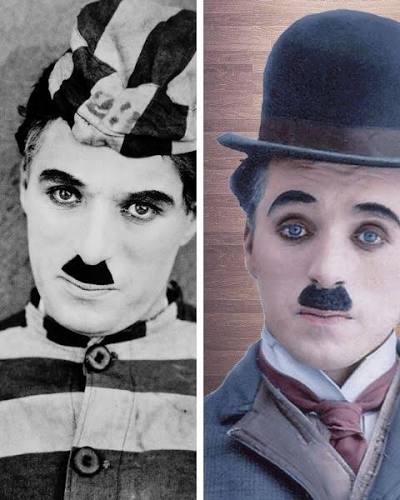
Charlie Chaplin was an English actor, filmmaker, composer, and producer who became one of the most prominent figures of twentieth-century cinema. His career included s...
Explore event →
30 January 1933–30 April 1945 — Hitler rules Germany as dictator and becomes the central political authority behind Nazi expansion, racial policy and the decision to l...
Explore research
30 January 1933–30 April 1945 — Hitler rules Germany as dictator and becomes the central political authority behind Nazi expansion, racial policy and the decision to l...
Explore research
30 January 1933–30 April 1945 — Hitler rules Germany as dictator and becomes the central political authority behind Nazi expansion, racial policy and the decision to l...
Explore research
27 January 1945 — Soviet troops reach the Auschwitz concentration and extermination complex in occupied Poland. They find thousands of surviving prisoners and extensiv...
Explore research
29 September 1941 — German SS, police and associated units murder tens of thousands of Jews in the Babi Yar ravine near Kyiv over two days. The massacre becomes one of...
Explore research
20 April 1945 — Soviet artillery begins shelling central Berlin as forces close around the German capital. Street fighting becomes intense while Nazi leaders remain in...
Explore research
8 November 1923 — Adolf Hitler and the Nazi Party attempt to seize power in Bavaria and march on Berlin. The putsch collapses after police confront the conspirators in...
Explore research
2 May 1945 — German forces in Berlin surrender to the Red Army. Soviet troops control the capital of Nazi Germany. Fighting continues elsewhere for several days, but t...
Explore research
29 October 1929 — The Depression massively increases unemployment and political instability while Nazi electoral support grows dramatically. But economic misery does n...
Explore research
28 June 1919 — Versailles created genuine political grievances and became a powerful symbol in German nationalist politics. Yet there were many possible paths after 19...
Explore research
23 March 1933 — The Reichstag passes legislation allowing Hitler's cabinet to enact laws without normal parliamentary approval. Communist deputies are absent or impris...
Explore research
1 January 1942 — By 1942 SS planning for a postwar German empire in Eastern Europe envisions massive population displacement, German settlement and racial reordering. ...
Explore research
1 July 1944 — As German armies retreat through Belarus and Poland, infrastructure, villages and transport networks are frequently destroyed. Nazi occupation has alread...
Explore research
12 March 1938 — German troops enter Austria after intense political pressure on the Austrian government. Hitler announces the incorporation of Austria into the German ...
Explore research
1 September 1939 — German forces invade Poland from the west, north and south, beginning the European phase of the Second World War. The attack follows months of escal...
Explore research
15 March 1939 — German forces occupy Prague and dismantle what remains of Czechoslovakia. The move is politically important because it extends Nazi domination over ter...
Explore research
18 February 1943 — Joseph Goebbels delivers his Sportpalast speech after Stalingrad, calling for even greater mobilization of German society. The speech reflects growi...
Explore research
18 October 1936 — Göring receives authority over the Four Year Plan, designed to prepare Germany's economy for war. He becomes one of the most powerful figures in the ...
Explore research
18 October 1936 — Göring receives authority over the Four Year Plan, designed to prepare Germany's economy for war. He becomes one of the most powerful figures in the ...
Explore research
2 August 1934 — President Hindenburg dies and Hitler combines the powers of president and chancellor. Members of the armed forces swear a personal oath of loyalty to H...
Explore research
30 March 1941 — Hitler addresses senior military officers and presents the coming war against the Soviet Union as an ideological struggle requiring destruction of Bols...
Explore research
1939–1945 wartime role — IG Farben is one of Germany's largest chemical-industrial corporations and becomes deeply integrated into the Nazi war economy. It supplies sy...
Explore research
1939–1945 wartime role — IG Farben is one of Germany's largest chemical-industrial corporations and becomes deeply integrated into the Nazi war economy. It supplies sy...
Explore research
9 November 1938 — Nazi-organized violence erupts against Jews throughout Germany and Austria. Synagogues are burned, businesses destroyed, people murdered and tens of ...
Explore research