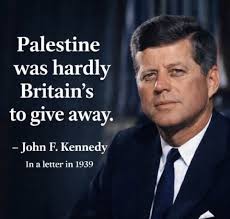
JFK Wrote in 1939 That Palestine Was Hardly Britain's to Give Away
JFK Wrote in 1939 That Palestine Was Hardly Britain's to Give Away In July 1939, John F. Kennedy, then a 22-year-old Harvard student, visited Palestine duri...
Explore event →History does not happen in isolation. Explore world events across time, follow the connections between them, and investigate the threads that reveal how one event can lead to another.
TheTimeMap currently follows events across 95 countries and 268 years of history — building a connected archive designed for people who want to look beyond the headline.
We oppose antisemitism, racism, and dehumanization — everywhere.
When people stop feeling, injustice becomes easy.
JFK Wrote in 1939 That Palestine Was Hardly Britain's to Give Away In July 1939, John F. Kennedy, then a 22-year-old Harvard student, visited Palestine duri...
Explore event →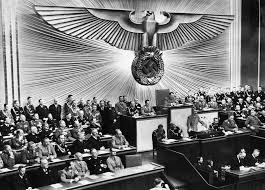
Adolf Hitler References British Rule in Palestine in Reichstag Address “It appears to have slipped Mr. Roosevelt’s mind that Palestine is not being occupied...
Explore event →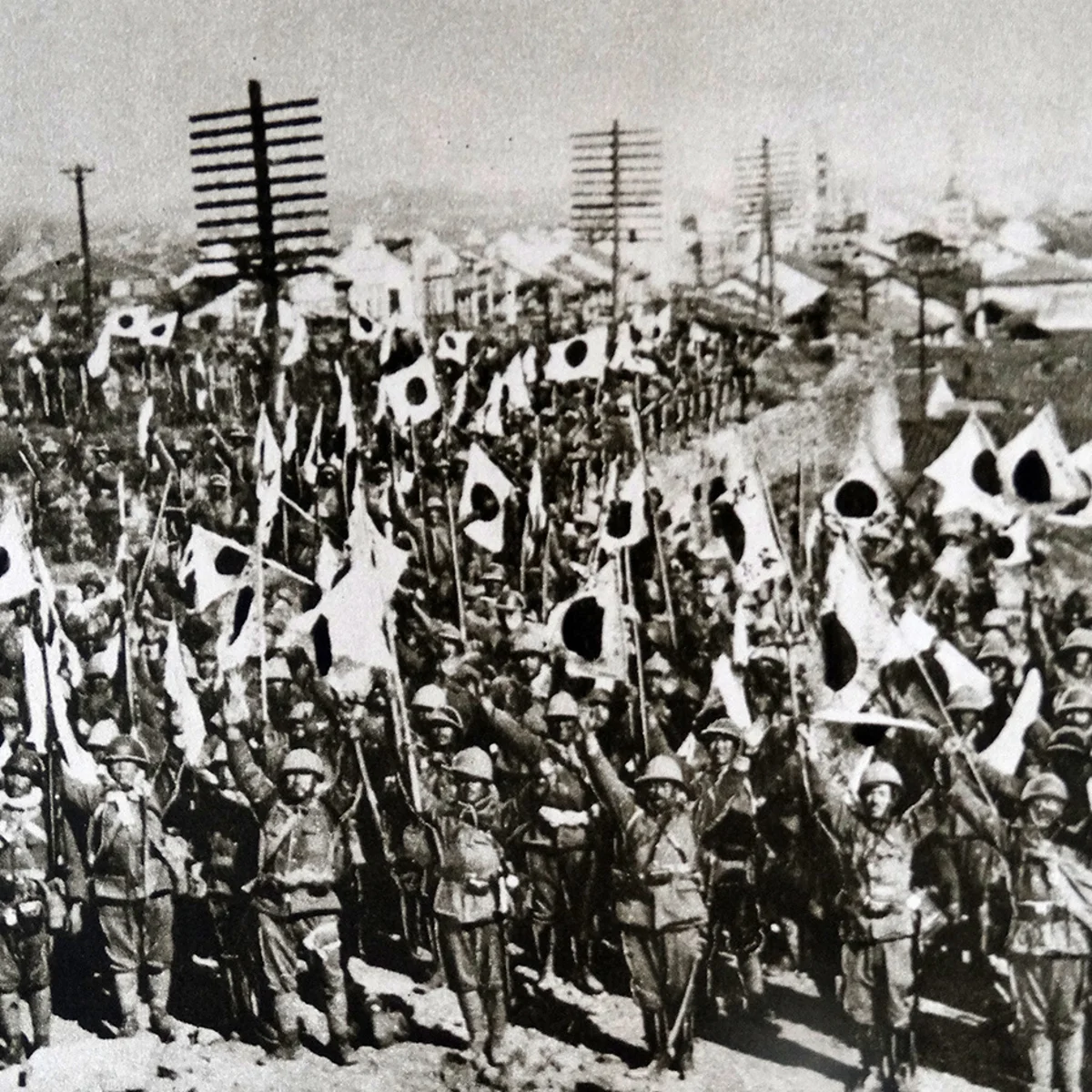
The Nanjing Massacre, also known as the Rape of Nanjing, occurred during the Second Sino-Japanese War after Japanese forces captured the city of Nanjing, then the capi...
Explore event →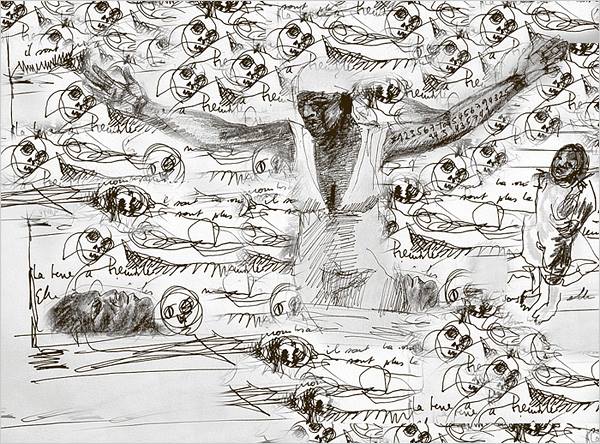
The Haitian Parsley Massacre, also known as the 1937 Parsley Massacre or the Haitian Massacre, was a mass killing carried out by the Dominican Army under the orders of...
Explore event →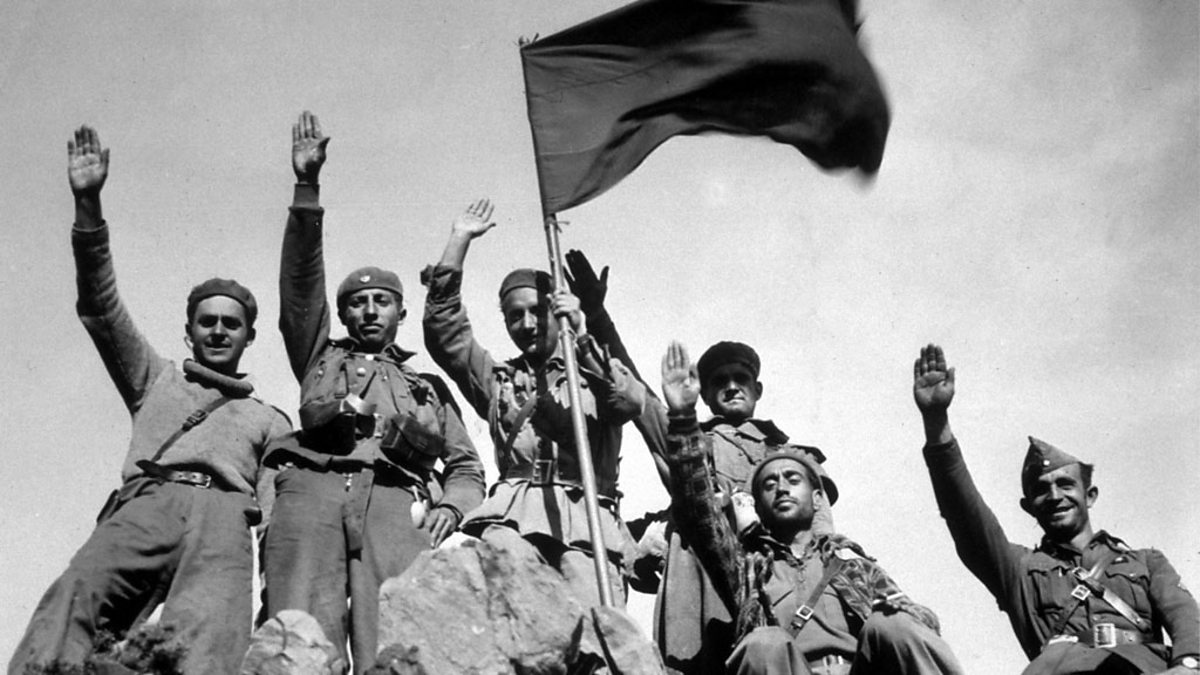
The Spanish Civil War began between Republicans and Nationalists, reflecting ideological battles over fascism, socialism, and democracy, with international implications.
Explore event →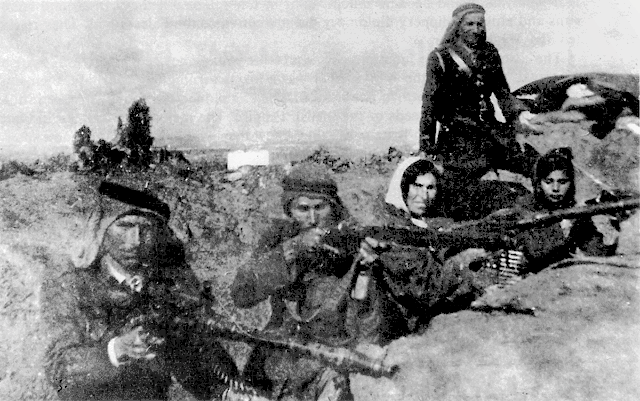
The Arab Revolt in Palestine was a nationalist uprising by Palestinian Arabs against British colonial rule and mass Jewish immigration under the British Mandate, which...
Explore event →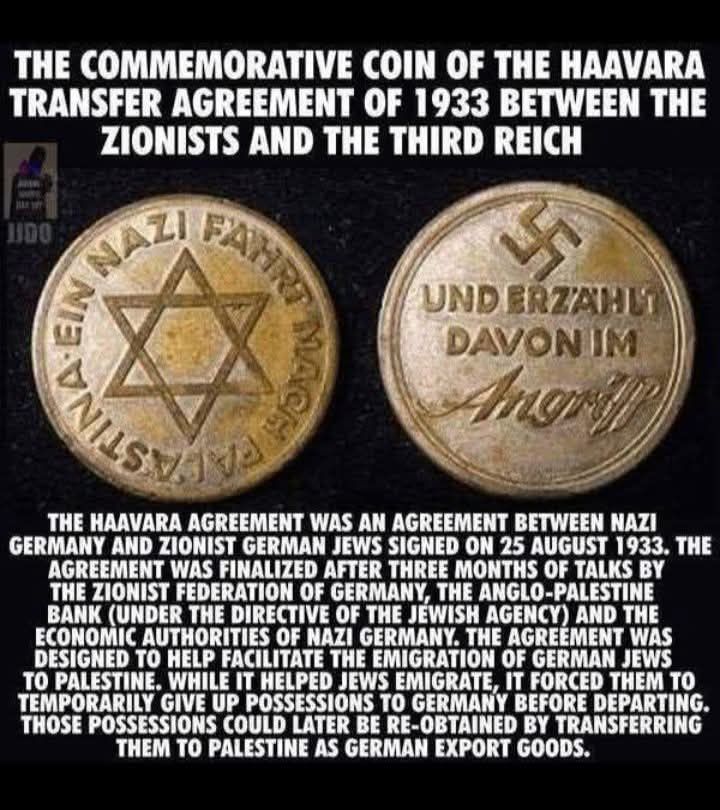
The Haavara (Transfer) Agreement was signed on August 25, 1933, between Nazi Germany and Zionist organizations, including the Jewish Agency. The agreement facilitated ...
Explore event →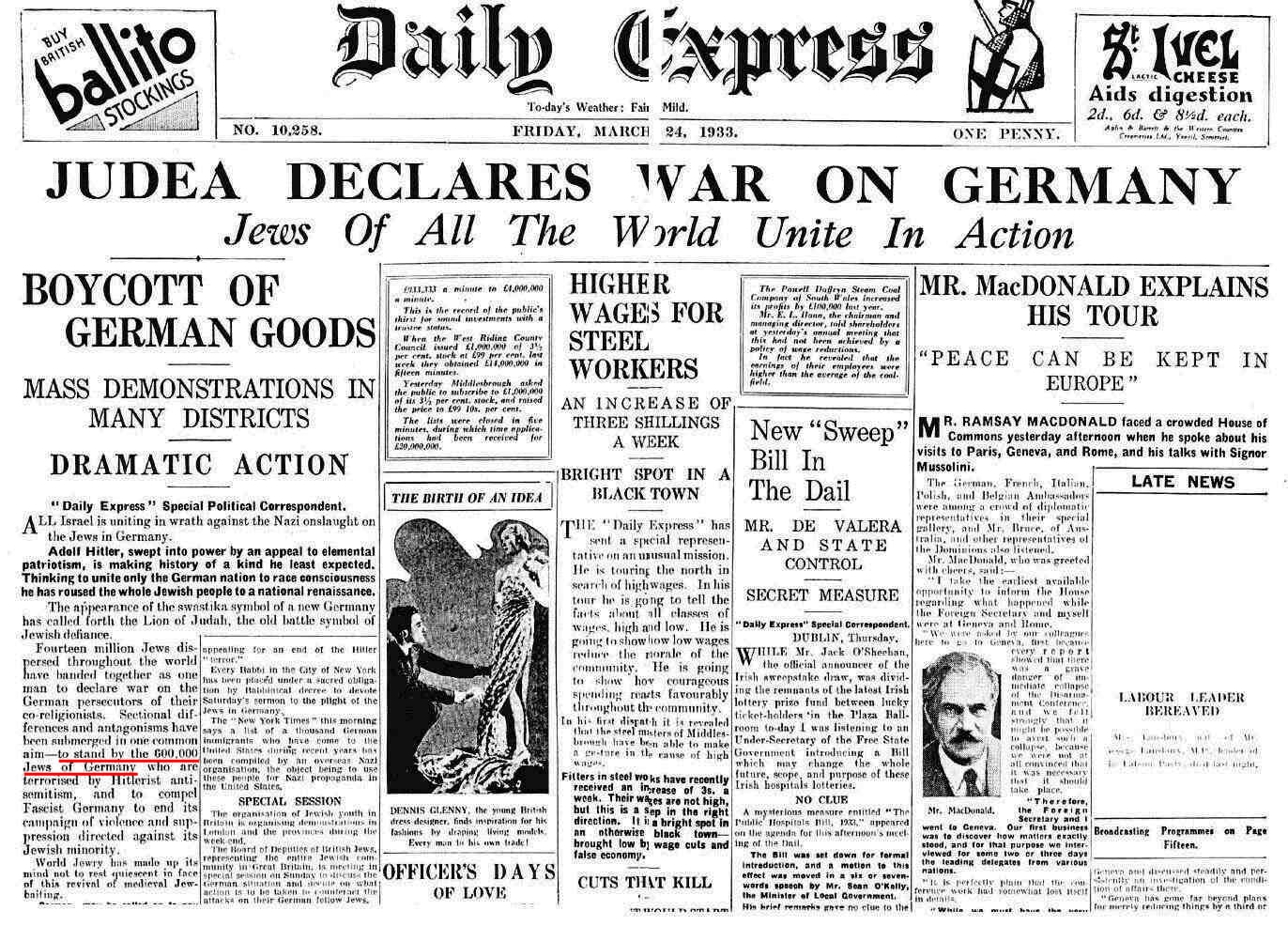
On March 24, 1933, the British newspaper Daily Express published a front-page headline reading “JUDEA DECLARES WAR ON GERMANY: Jews of All the World Unite.” The articl...
Explore event →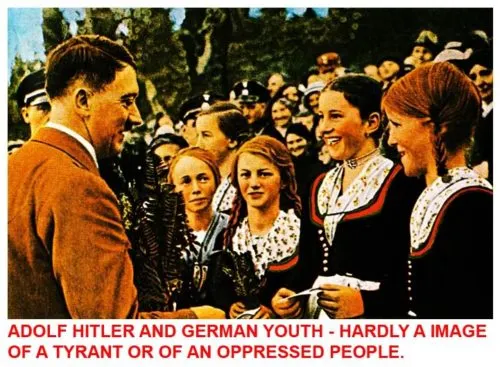
Before Hitler rose to power, major banks and financiers profited from high interest rates in Germany. During the Weimar Republic, government bonds often carried 6-10% ...
Explore event →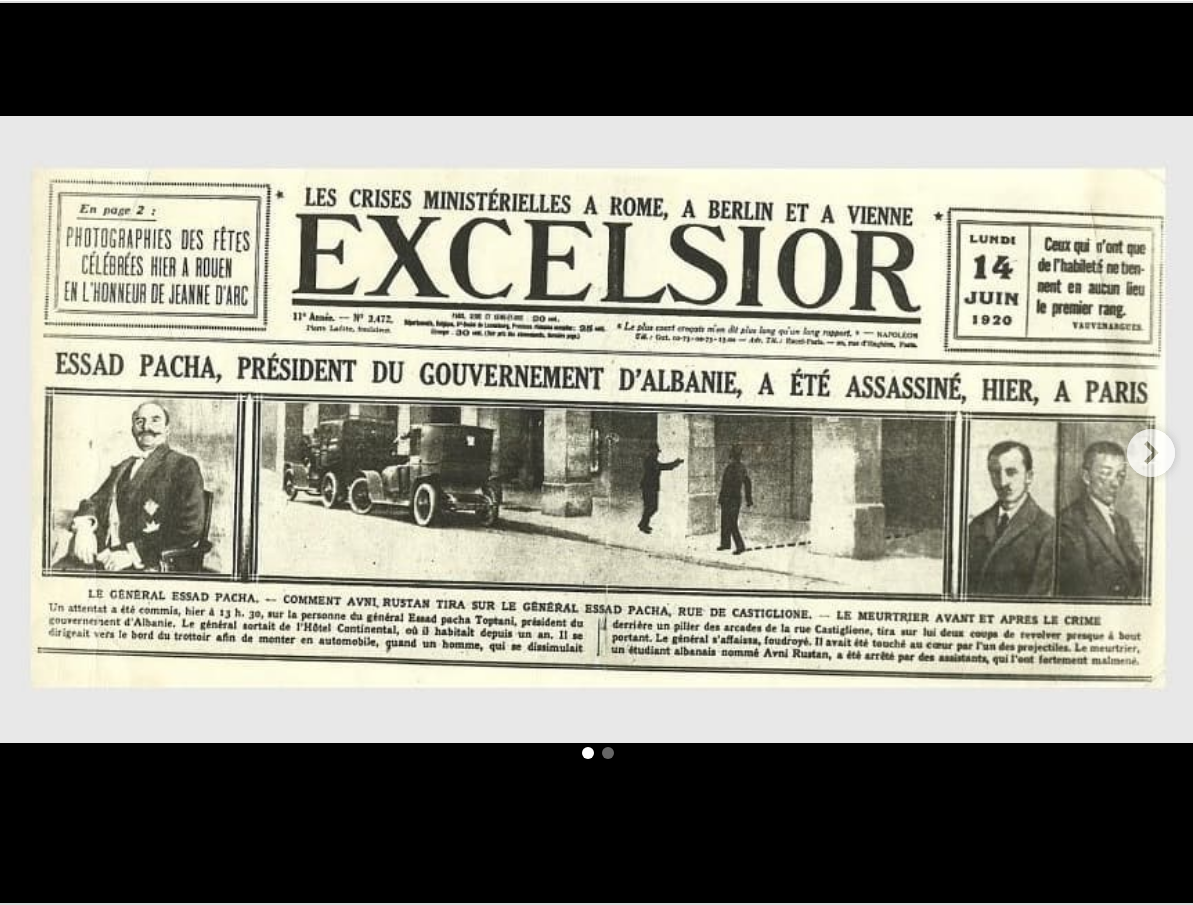
On June 17, 1920, Albanian nationalist Avni Rustemi traveled to Paris and assassinated Essad Pasha Toptani, a former Albanian politician and military leader. Essad Pas...
Explore event →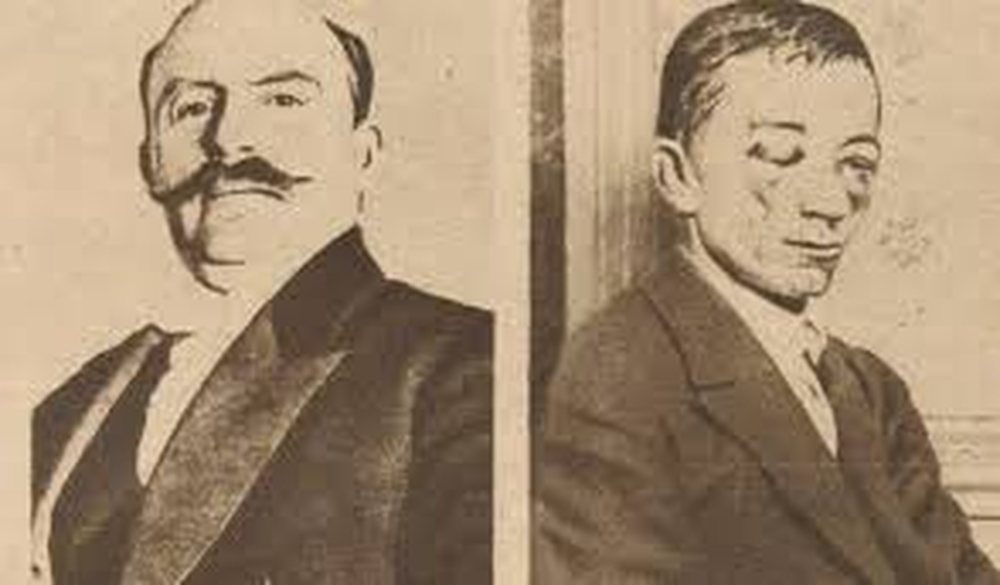
On June 13, 1920, Albanian political activist Avni Rustemi shot and killed Essad Pasha Toptani in Paris, France. Essad Pasha was an Albanian Ottoman-era political and ...
Explore event →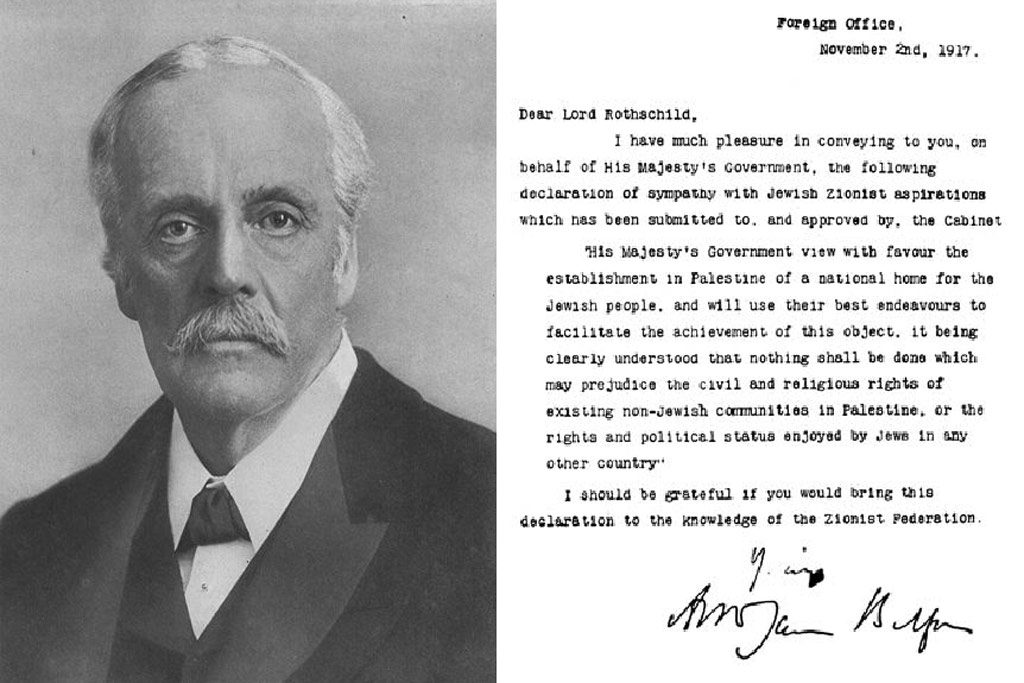
The Balfour Declaration was a public statement issued on November 2 1917 by the British government during World War I expressing support for the establishment of a nat...
Explore event →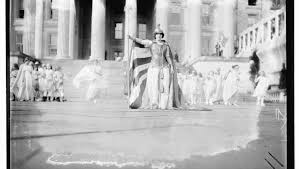
1913 – Foundations of the Modern World body { font-family: Arial, sans-serif; background-color: #f4f4f9; margin: 0; padding: 0; } .timeline-container { ...
Explore event →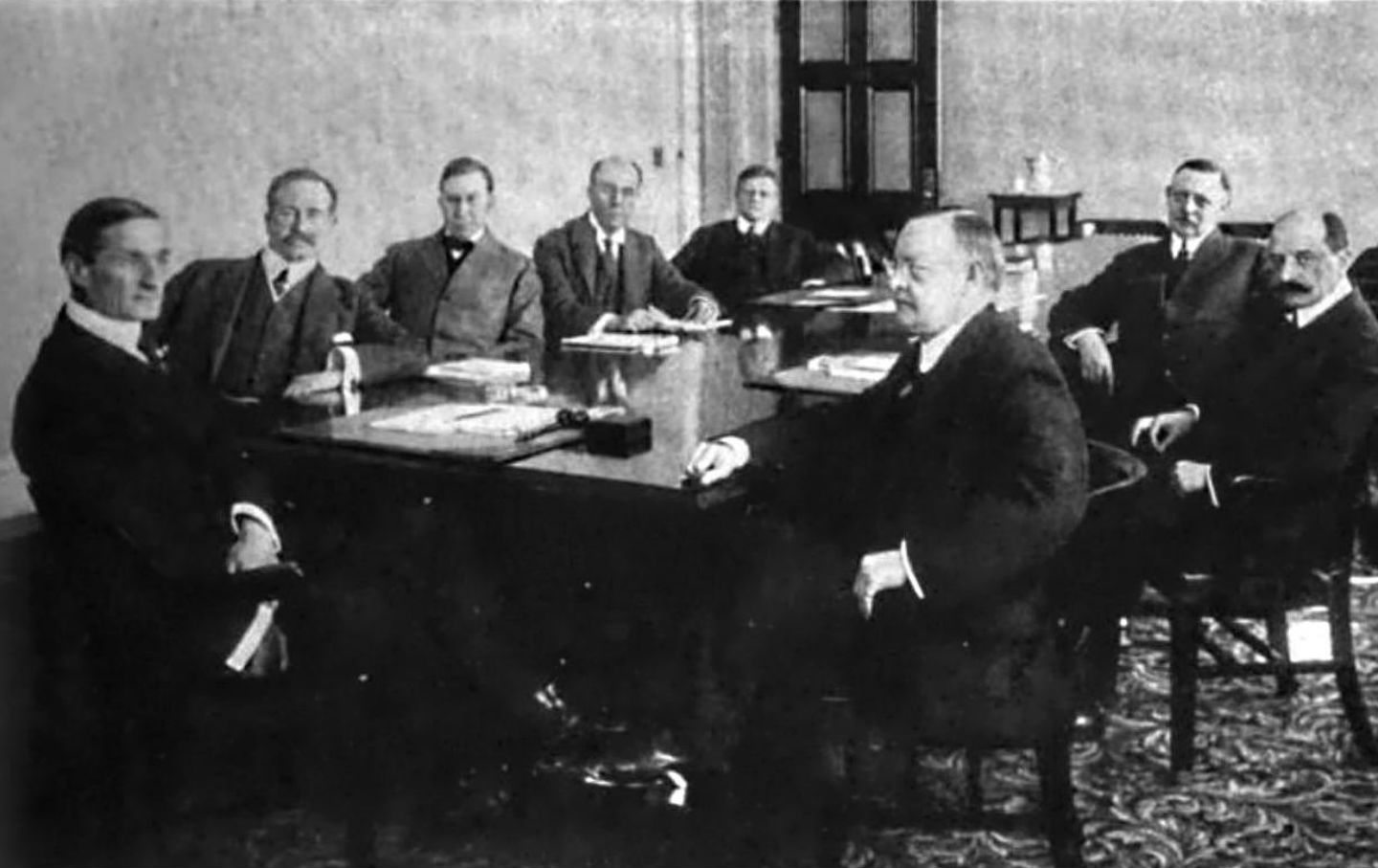
The creation of the Federal Reserve System on December 23, 1913, established the central banking authority of the United States. It was enacted through the Federal Res...
Explore event →
In August 1913, Leo Frank, a Jewish factory superintendent at the National Pencil Company in Atlanta, Georgia, was tried and convicted for the murder of 13-year-old Ma...
Explore event →
The Titanic sank on April 15, 1912, during its maiden voyage from Southampton to New York. Among the planned passengers was financier J.P. Morgan, head of the Internat...
Explore event →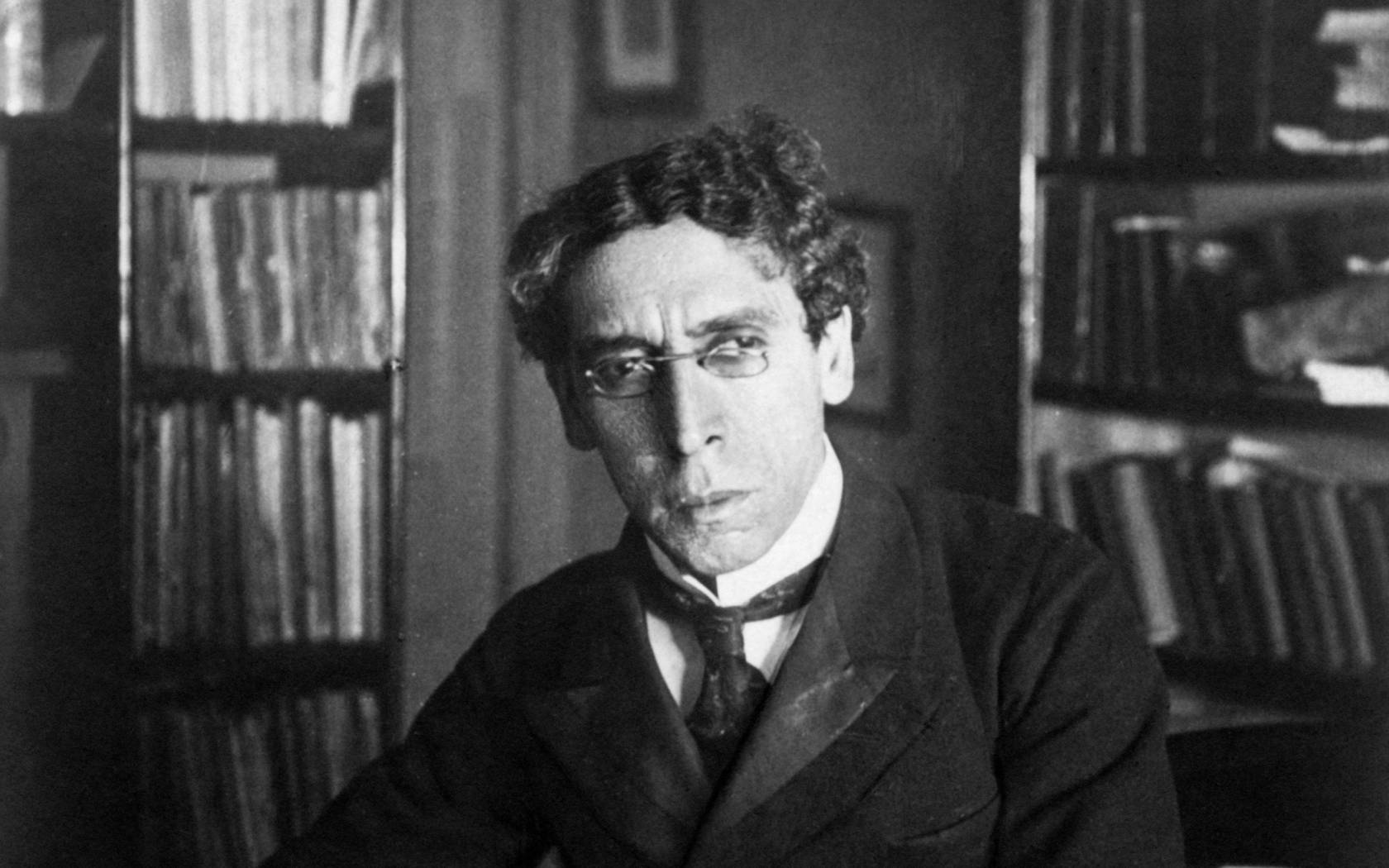
In 1908, British-born Jewish writer and playwright **Israel Zangwill** published his play **“The Melting Pot”**, which popularized the phrase as a metaphor for America...
Explore event →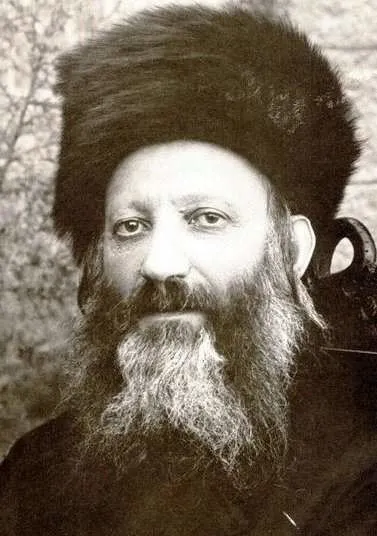
Abraham Isaac Kook (December 9, 1865 – September 1, 1935) was a Jewish religious thinker, rabbi, and the first Ashkenazi Chief Rabbi of British Mandate Palestine. He i...
Explore event →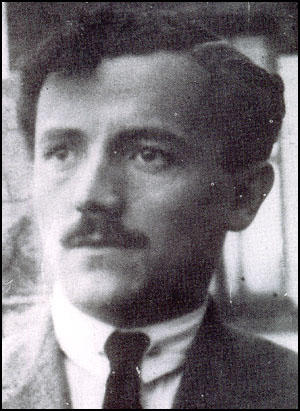
Alexander Orlov, born Lev Lazarevich Feldbin on 21 August 1895 in Bobruisk, was a Soviet NKVD officer from an Orthodox Jewish family. He later operated under several a...
Explore event →
Gaston Méry (10 31 1866 – 6 17 1909), a French journalist and playwright, is among the first documented figures to use the term “racisme” in French nationalist and ant...
Explore event →
Charlie Chaplin was an English actor, filmmaker, composer, and producer who became one of the most prominent figures of twentieth-century cinema. His career included s...
Explore event →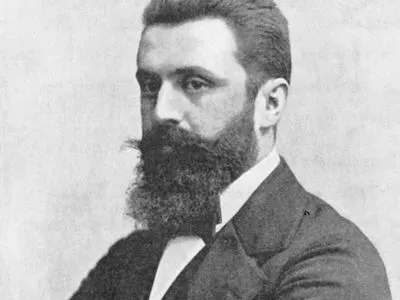
Theodor Herzl (May 2, 1860 – July 3, 1904) was an Austro‑Hungarian journalist, playwright, and writer who is considered a founder of modern political Zionism. Herzl pr...
Explore event →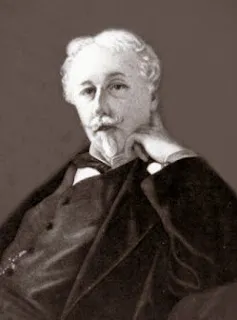
Joseph Arthur de Gobineau (7 14 1816 – 10 13 1882), a French diplomat and writer, published his four-volume work Essai sur l’inégalité des races humaines between 1853 ...
Explore event →
Chinese artisans in Jingdezhen have significantly advanced porcelain production techniques, enhancing the quality and durability of ceramics. These improvements includ...
Explore event →
6 August 2015 — Egypt inaugurates a major expansion of the Suez Canal involving a new parallel channel along part of the route and widening of existing sections. The g...
Explore research
1998–1999 — War in neighboring Kosovo becomes a major national and humanitarian issue for Albania. Hundreds of thousands of Kosovo Albanian refugees cross into Albania...
Explore research
January–August 1997 — The collapse of enormous fraudulent investment schemes wipes out the savings of hundreds of thousands of Albanians. Armed rebellion spreads, mili...
Explore research
8 December 1990 — Students in Tirana begin demonstrations demanding political and economic change. The protests rapidly become a national challenge to communist one-pa...
Explore research
1978 — Chinese economic and military assistance ends after years of growing ideological disagreement. Albania loses its final major communist ally and enters an extrao...
Explore research
National Security Decision Memorandum 314 concerned U.S. population policy following the NSSM 200 study. President Gerald Ford approved the associated policy decision ...
Explore research
The completed National Security Study Memorandum 200 examined worldwide population growth, food supplies, minerals and fuel, economic development, population pressures...
Explore research
38th president of the United States. Ford succeeded Nixon in 1974 and subsequently approved a National Security Decision Memorandum concerning population policy.
Explore research
National Security Study Memorandum 200, issued April 24, 1974, directed a study of worldwide population growth and its implications for U.S. security and overseas inte...
Explore research
International membership organization founded in 1973 by David Rockefeller to bring together participants from North America, Europe, and Asia for discussion of intern...
Explore research
International organization founded by Klaus Schwab as the European Management Symposium in 1971. It later became the World Economic Forum and developed into a platform...
Explore research
President-elect Richard Nixon selected Henry Kissinger as national security adviser during the transition to the Nixon administration.
Explore research
26 July–7 November 1956 — Nasser nationalizes the Suez Canal Company after Western governments withdraw support for the Aswan High Dam. Britain, France and Israel secr...
Explore research
1954–1970 — Nasser becomes the dominant leader of revolutionary Egypt and formally assumes the presidency in 1956. His government promotes Arab nationalism, land refor...
Explore research
29 November 1944 — German forces have withdrawn and the communist-led National Liberation Movement controls the country. Rival political organizations are rapidly excl...
Explore research
1942–1944 — Communist-led partisans, Balli Kombëtar and other nationalist forces resist Italian and later German occupation. Rival resistance movements also fight one ...
Explore research
1 September 1928 — Zogu transforms the republic into a monarchy and takes the title Zog I, King of the Albanians. The monarchy seeks modernization and stronger nationa...
Explore research
German-born American diplomat, political scientist, national security adviser, and secretary of state. He served as national security adviser beginning in 1969 and as ...
Explore research
21–31 January 1920 — Albanian political leaders meet at Lushnjë to reassert sovereignty and resist foreign plans that threatened partition. The congress creates new na...
Explore research
March–April 1919 — Mass demonstrations, strikes and civil unrest erupt after British authorities exile nationalist leader Saad Zaghloul and other members of the Wafd m...
Explore research
January–June 1919 — France prioritizes security and compensation for destruction. Britain wants Germany constrained without permanently destroying European economic st...
Explore research
January–June 1919 — Allied leaders negotiate borders, reparations, military restrictions, mandates and a new international organization. Wilson's language of self-dete...
Explore research
1917–1918 — Woodrow Wilson increasingly presents American participation as part of a larger project to restructure international relations. His Fourteen Points call fo...
Explore research
American banker, philanthropist, and international affairs figure. He served as chairman and chief executive of Chase Manhattan Bank and was a major participant in org...
Explore research