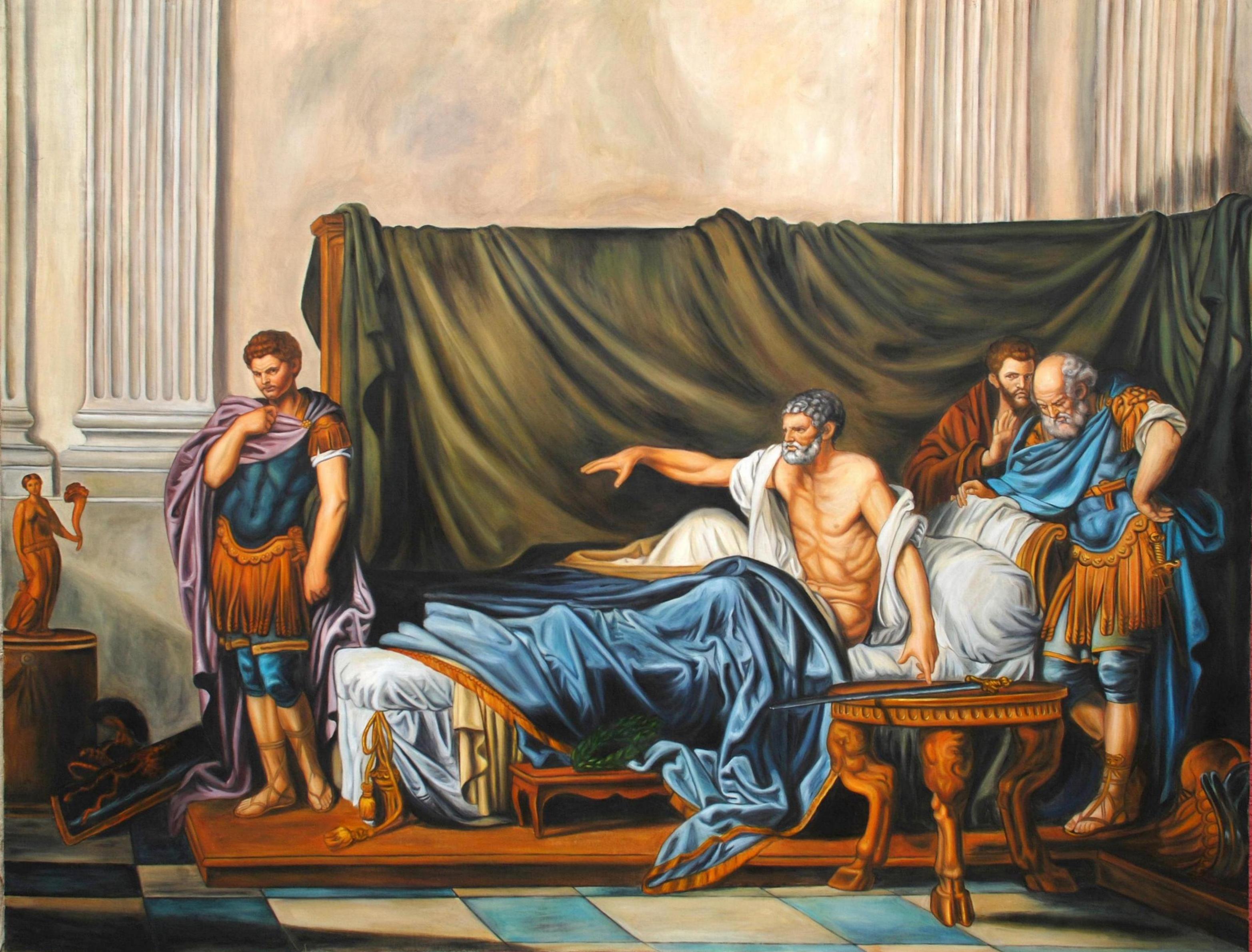
Death of Roman Emperor Severus
Septimius Severus, Roman Emperor, died on February 4th while in the city of Lugdunum, in the Roman province of Gallia Lugdunensis. His death marked the end of his two-...
Explore event →History does not happen in isolation. Explore world events across time, follow the connections between them, and investigate the threads that reveal how one event can lead to another.
TheTimeMap currently follows events across 95 countries and 268 years of history — building a connected archive designed for people who want to look beyond the headline.
We oppose antisemitism, racism, and dehumanization — everywhere.
When people stop feeling, injustice becomes easy.
Septimius Severus, Roman Emperor, died on February 4th while in the city of Lugdunum, in the Roman province of Gallia Lugdunensis. His death marked the end of his two-...
Explore event →
11 February 2011 — Vice President Omar Suleiman announces that Hosni Mubarak has stepped down and transferred authority to the Supreme Council of the Armed Forces. Cel...
Explore research
25 January–11 February 2011 — Mass demonstrations erupt against police brutality, corruption, economic frustration and authoritarian government. Cairo's Tahrir Square ...
Explore research
28 February 1922 — Britain formally ends its protectorate and recognizes Egypt as an independent sovereign state. Important issues remain under British control, includ...
Explore research
1 February 1917–11 November 1918 — German submarines attack merchant shipping in an attempt to reduce British imports below sustainable levels. Early shipping losses a...
Explore research
21 February 1916 — Germany launches a major offensive against the fortified Verdun region. French forces commit enormous manpower and artillery to prevent the fortress...
Explore research
19 February 1915 — British and French naval forces begin major operations against the Ottoman defenses of the Dardanelles. The Allies hope to force the straits, threat...
Explore research
23 August 1942 — German forces begin the major assault phase against Stalingrad while the wider German campaign pushes toward oil resources in the Caucasus. Fighting i...
Explore research
Klaus Schwab organized the first European Management Symposium in Davos in February 1971. The meeting brought together hundreds of European business executives, academ...
Explore research
2 February 1942 — Fritz Sauckel's later appointment as General Plenipotentiary for Labour Deployment in March formalizes a rapidly expanding coercive labor system, whi...
Explore research
2 February 1943 — The last major German formations inside Stalingrad surrender. Approximately one of Germany's most powerful field armies has been destroyed or capture...
Explore research
1 February 1917 — Germany begins unrestricted submarine attacks against shipping approaching Allied-controlled waters. German naval leaders believe U-boats can reduce ...
Explore research
18 February 1943 — Joseph Goebbels delivers his Sportpalast speech after Stalingrad, calling for even greater mobilization of German society. The speech reflects growi...
Explore research
3 February 1830 — The London Protocol recognizes Greece as an independent state.
Explore research
On February 8, 1974, Secretary of State Henry Kissinger spoke by telephone with David Rockefeller. The surviving State Department transcript records discussion of Euro...
Explore research
14 February 1942 — The Polish underground Home Army is formally established as the principal armed resistance organization loyal to the government-in-exile. It fights ...
Explore research
27 February 1933 — Germany's parliament building burns in Berlin. The Nazi government uses the crisis to portray communism as an immediate revolutionary threat. Presid...
Explore research
28 February 1933 — President Hindenburg signs the Decree for the Protection of People and State after the Reichstag fire. Major constitutional protections involving sp...
Explore research
29 December 1944 — Soviet and Romanian forces encircle Budapest. Hitler orders the city held while German and Hungarian troops continue resistance. Fighting becomes ex...
Explore research
19 February 1943 — German forces under Erich von Manstein begin a counteroffensive that retakes Kharkov after Soviet armies overextend following Stalingrad. The operat...
Explore research
1917–1918 wartime revolutionary leadership — Lenin returns to Russia after the February Revolution and argues for transfer of power to the soviets, withdrawal from the...
Explore research
4 February 1945 — At Yalta, the Western Allies and Soviet Union remain military partners but increasingly disagree about Poland and the political future of Eastern Eur...
Explore research
8 February 1942 — Use the expansion of wartime production as the investigative anchor. Companies in Allied and Axis states received enormous military orders, while the...
Explore research
2 February 1943 — Investigate Hitler's refusal to withdraw, Paulus's obedience, overextended German logistics, the weakness of Axis flanks, Soviet planning, intelligen...
Explore research