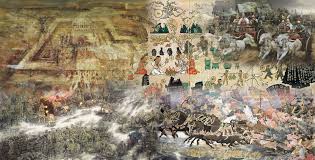
Ma Yuan's Southern Military Campaigns
Ma Yuan was a prominent Han dynasty general who led campaigns in the southern regions of China to consolidate Han authority over the Nanyue Kingdom. His military exped...
Explore event →History does not happen in isolation. Explore world events across time, follow the connections between them, and investigate the threads that reveal how one event can lead to another.
TheTimeMap currently follows events across 95 countries and 268 years of history — building a connected archive designed for people who want to look beyond the headline.
We oppose antisemitism, racism, and dehumanization — everywhere.
When people stop feeling, injustice becomes easy.
Ma Yuan was a prominent Han dynasty general who led campaigns in the southern regions of China to consolidate Han authority over the Nanyue Kingdom. His military exped...
Explore event →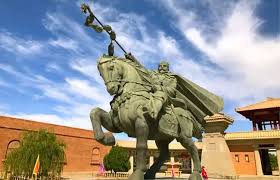
Ban Chao, a Chinese general and diplomat of the Eastern Han dynasty, is recorded as sending an envoy toward the western regions in an effort to establish contacts with...
Explore event →
1917–1918 — Woodrow Wilson increasingly presents American participation as part of a larger project to restructure international relations. His Fourteen Points call fo...
Explore research
December 1916–January 1917 — German naval and military leaders conclude that unrestricted submarine warfare may force Britain out of the war. They understand that the ...
Explore research
July 1914 — Russian leaders view Serbia as both a political partner and a test of Russian great-power credibility in the Balkans. Previous retreats in regional crises ...
Explore research
23 July 1914 — Austria-Hungary presents Serbia with a severe ultimatum designed to suppress anti-Habsburg activity and permit substantial Austro-Hungarian involvement ...
Explore research
28 June 1919 — Versailles created genuine political grievances and became a powerful symbol in German nationalist politics. Yet there were many possible paths after 19...
Explore research
28 June 1919 onward — The Treaty of Versailles becomes one of the most controversial diplomatic settlements in modern history. Reparations, territorial changes, milita...
Explore research
8 September 1926 — Germany enters the League of Nations as a permanent Council member. The move symbolizes the diplomatic normalization associated with Gustav Stresema...
Explore research
14 October 1933 — Hitler announces Germany's withdrawal from the League of Nations and the World Disarmament Conference. The move rejects an important part of the dipl...
Explore research
10 January 1920 — The League of Nations formally begins operation as part of the postwar effort to create a system of collective security. Its members pledge to addres...
Explore research
23 August 1939 — Nazi Germany and the Soviet Union sign a non-aggression pact. Secret protocols divide parts of Eastern Europe into German and Soviet spheres of influe...
Explore research
30 July 1914 — Tsar Nicholas II approves general mobilization of Russian forces after growing alarm over Austria-Hungary's attack on Serbia. Russian leaders fear that ...
Explore research
25 July 1914 — Serbia submits a conciliatory reply accepting most Austro-Hungarian demands while rejecting or qualifying provisions that would allow foreign officials ...
Explore research
Untitled3 April 1939 — German military leaders receive instructions to prepare Fall Weiss, the operational plan for attacking Poland. The target date is set so prepara...
Explore research
Untitled25 April 1943 — The Soviet Union breaks diplomatic relations with the Polish government-in-exile after disputes over investigation of the Katyn massacre. The b...
Explore research
The overlap between the White House national-security apparatus and the State Department created an institutional interface through which Kissinger participated in bot...
Explore research
23 August 1939 — The German-Soviet pact is one of the most shocking diplomatic reversals of the twentieth century. Investigate failed Soviet-Western negotiations, Stal...
Explore research