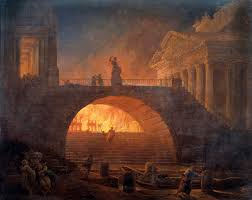
Devastating Blaze Engulfs Ancient Rome
The Great Fire broke out in the city of Rome, spreading rapidly through wooden structures and thatched roofs. The blaze lasted several days, destroying vast parts of t...
Explore event →History does not happen in isolation. Explore world events across time, follow the connections between them, and investigate the threads that reveal how one event can lead to another.
TheTimeMap currently follows events across 95 countries and 268 years of history — building a connected archive designed for people who want to look beyond the headline.
We oppose antisemitism, racism, and dehumanization — everywhere.
When people stop feeling, injustice becomes easy.
The Great Fire broke out in the city of Rome, spreading rapidly through wooden structures and thatched roofs. The blaze lasted several days, destroying vast parts of t...
Explore event →
1917–1918 — Woodrow Wilson increasingly presents American participation as part of a larger project to restructure international relations. His Fourteen Points call fo...
Explore research
1914–1918 — Austro-Hungarian, Italian, French, Serbian and other forces occupy different parts of Albania. The country largely loses unified central government during ...
Explore research
1204 — Constantinople is captured and Latin states are established across parts of Greece.
Explore research
969 CE — The Isma'ili Shi'a Fatimid Caliphate conquers Egypt and establishes a new political center north of Fustat. Egypt becomes the heart of a powerful caliphate ex...
Explore research
c. 6500–5500 BCE — Farming, livestock keeping and permanent villages become established in parts of the territory of modern Albania. Communities increasingly depend on...
Explore research
29 October 1929 — The Depression massively increases unemployment and political instability while Nazi electoral support grows dramatically. But economic misery does n...
Explore research
8 September 1926 — Germany enters the League of Nations as a permanent Council member. The move symbolizes the diplomatic normalization associated with Gustav Stresema...
Explore research
c. 1928–1953 — Stalin controls the Soviet political system during the entire war. His prewar purges severely damage parts of the officer corps, while his misjudgment o...
Explore research
c. 1928–1953 — Stalin controls the Soviet political system during the entire war. His prewar purges severely damage parts of the officer corps, while his misjudgment o...
Explore research
c. 1928–1953 — Stalin controls the Soviet political system during the entire war. His prewar purges severely damage parts of the officer corps, while his misjudgment o...
Explore research
23 August 1939 — Germany and the Soviet Union sign a non-aggression agreement. Secret protocols divide parts of Eastern Europe into German and Soviet spheres of influe...
Explore research
23 August 1939 — Nazi Germany and the Soviet Union sign a non-aggression pact. Secret protocols divide parts of Eastern Europe into German and Soviet spheres of influe...
Explore research
6th–7th centuries — Slavic groups settle in parts of the Greek peninsula during major demographic upheaval.
Explore research
8 May 1945 — By the end of the war Soviet armies occupy large parts of Eastern and Central Europe. Stalin interprets political influence in this region as essential pr...
Explore research
31 July 1917 — British-led forces begin the offensive later associated with Passchendaele. Heavy artillery, persistent rain and destroyed drainage systems turn parts o...
Explore research
20 January 1942 — Senior Nazi officials meet near Berlin to coordinate bureaucratic implementation of the so-called Final Solution of the Jewish Question. Mass killing...
Explore research